
-
Full-Day Hikes
Rainbow Mountain Tour Palccoyo Rainbow Mountain Humantay Lake Tour Ausangate 7 Lagoons HikeMulti-Day Trek
Salkantay TrekWellness
Ayahuasca Ceremonies -
Machu Picchu & Inca Trail
Machu Picchu: The Complete 2026 Guide Machu Picchu: Circuit 1 vs Circuit 2 Machu Picchu: Circuit 2a vs 2b How to Get to Machu Picchu How Hard Is the Inca Trail to Machu Picchu Inca Trail Safety GuideCompare & Choose
Inca Trail vs Salkantay Which Rainbow Mountain? Humantay vs Rainbow Mtn Machu Picchu Mountain vs Huayna PicchuTrip Planning
Peru 8-Day Itinerary Wonders of Peru — 7 Days Best Time to Visit Cusco Altitude Sickness Guide Peru Currency Guide Best Hotels in PeruCulture, Nature & More Treks
Nazca Geoglyphs Guide Pallay Punchu — Hidden Rainbow Mtn Ausangate Trek Guide Llama vs Alpaca vs Vicuña Ayahuasca Safety Guide -
Dining
Best Restaurants in Cusco, Peru Best Restaurants in Peru: Lima's Dining SceneMarkets & Shopping
Cusco Markets: San Pedro, Pisac & Chinchero Where to Buy Real Alpaca Wool in CuscoNightlife & Drinks
Cusco Nightlife & Drinks Guide -
Ausangate 7 Lagoons Palccoyo Rainbow Mountain Humantay Lake Vinicunca Rainbow Mountain
Opens on TripAdvisor — real traveler reviews, instant confirmation.
- About
- Contact
How Hard Is the Inca Trail
to Machu Picchu? The Honest Answer
The Inca Trail to Machu Picchu is rated moderate to challenging. But that rating conceals the most important truth — the trail is not hard because of its distance. It is hard because of its altitude, its 3,000 stone steps, and because most people arrive underprepared for the specific demands of high-altitude hiking. Here is the honest answer from guides who walk it every week.
The Honest Difficulty Assessment
Most guides rate the Inca Trail as "moderate to challenging." That is accurate but incomplete. Here is the fuller picture that actually helps you decide whether you can do it.
The trail covers 43 km over 4 days — an average of about 10 km per day. That distance is not the problem. The problem is that approximately 3,000 of those steps are carved stone, often steep, irregular and unforgiving on the knees. And the maximum altitude of 4,215m at Dead Woman's Pass means your body is working significantly harder than it would at sea level from the moment you start Day 2.
We have guided the Inca Trail with marathon runners who struggled on Day 2 because they arrived in Cusco the day before and skipped acclimatisation. We have guided 60-year-old first-time hikers who completed it comfortably because they spent 3 days in Cusco first. The single most reliable predictor of whether you will complete the trail is not your fitness level. It is how well you acclimatised before you started.
The Classic Inca Trail: What Each Day Actually Feels Like
The 4-day Classic Inca Trail has a very specific difficulty curve. Days 1 and 4 are manageable. Day 3 is beautiful. Day 2 is the one that tests everyone — including our guides.
The warm-up — gentle but long
The trail begins at Piscacucho (km 82) at 2,600m and follows the Urubamba River before ascending to Wayllabamba camp at 3,000m. It is a long day but not a hard one — the gradient is gradual and the altitude gain is modest. Most trekkers feel good and are lulled into thinking Day 2 will be similar. It will not be. Use Day 1 to pace yourself, hydrate aggressively, and resist the urge to rush.
Dead Woman's Pass — the day that defines the trail
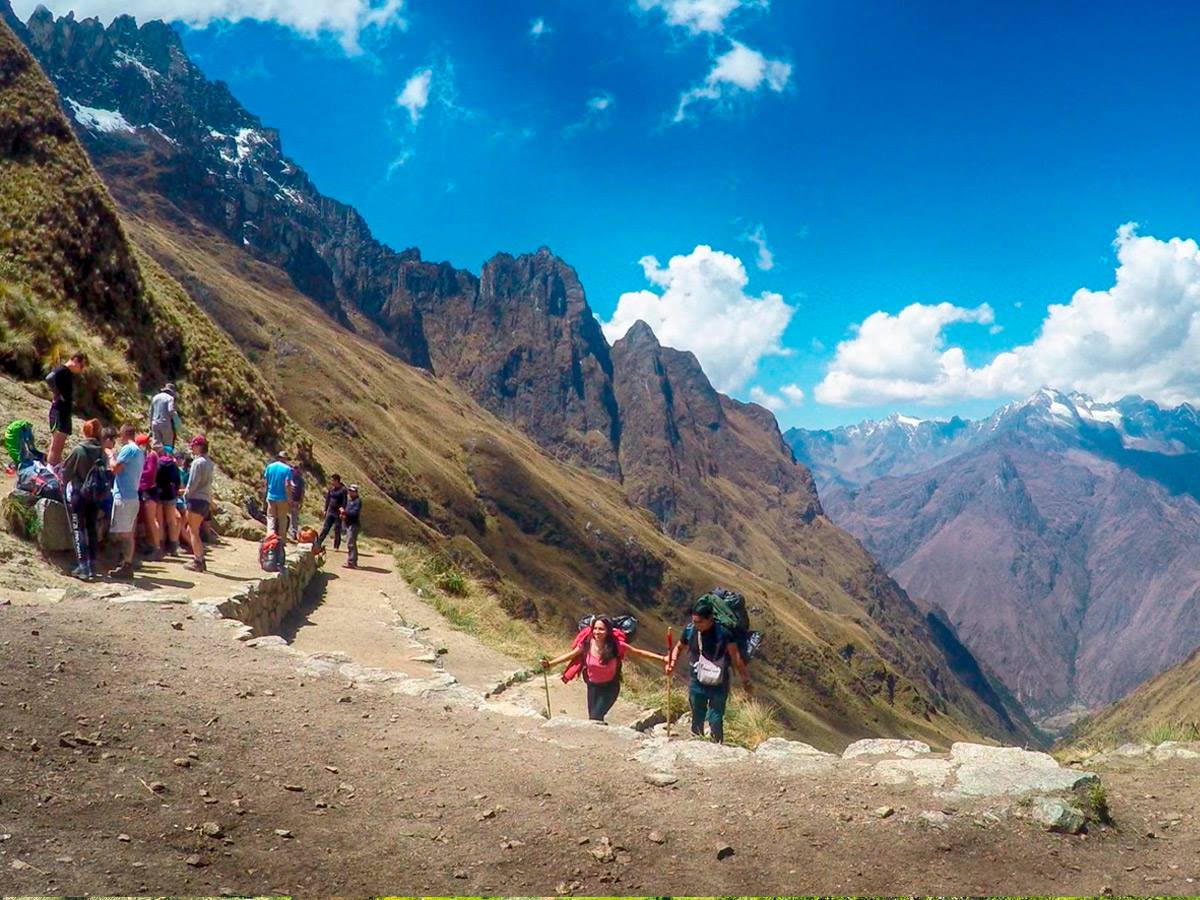
This is the day. You begin ascending immediately from camp at 3,000m and climb continuously for approximately 3 hours to the summit of Dead Woman's Pass at 4,215m — a 1,200m elevation gain. The final section is steep stone steps at altitude where each breath delivers significantly less oxygen than at sea level. Most people slow to a deliberate, methodical pace. Those who have not acclimatised properly will find this section genuinely difficult. Those who have will find it demanding but achievable.
After the pass the trail descends to Pacaymayu camp at 3,600m. The descent is hard on the knees — trekking poles are not optional here. A second smaller pass at 3,998m follows before the final descent to camp.

The ruins day — the most beautiful of the four
Day 3 is the longest in distance but widely considered the most enjoyable. The trail passes through the most significant archaeological sites on the entire route — Runkurakay, Sayacmarca and Phuyupatamarca — before descending through cloud forest to Wiñay Wayna camp at 2,650m. The altitude is lower than Day 2, the scenery is extraordinary, and the ruins are impressive enough to make you forget you are tired. Most trekkers describe Day 3 as their favourite day on the trail.
The Sun Gate — the reason the trail exists
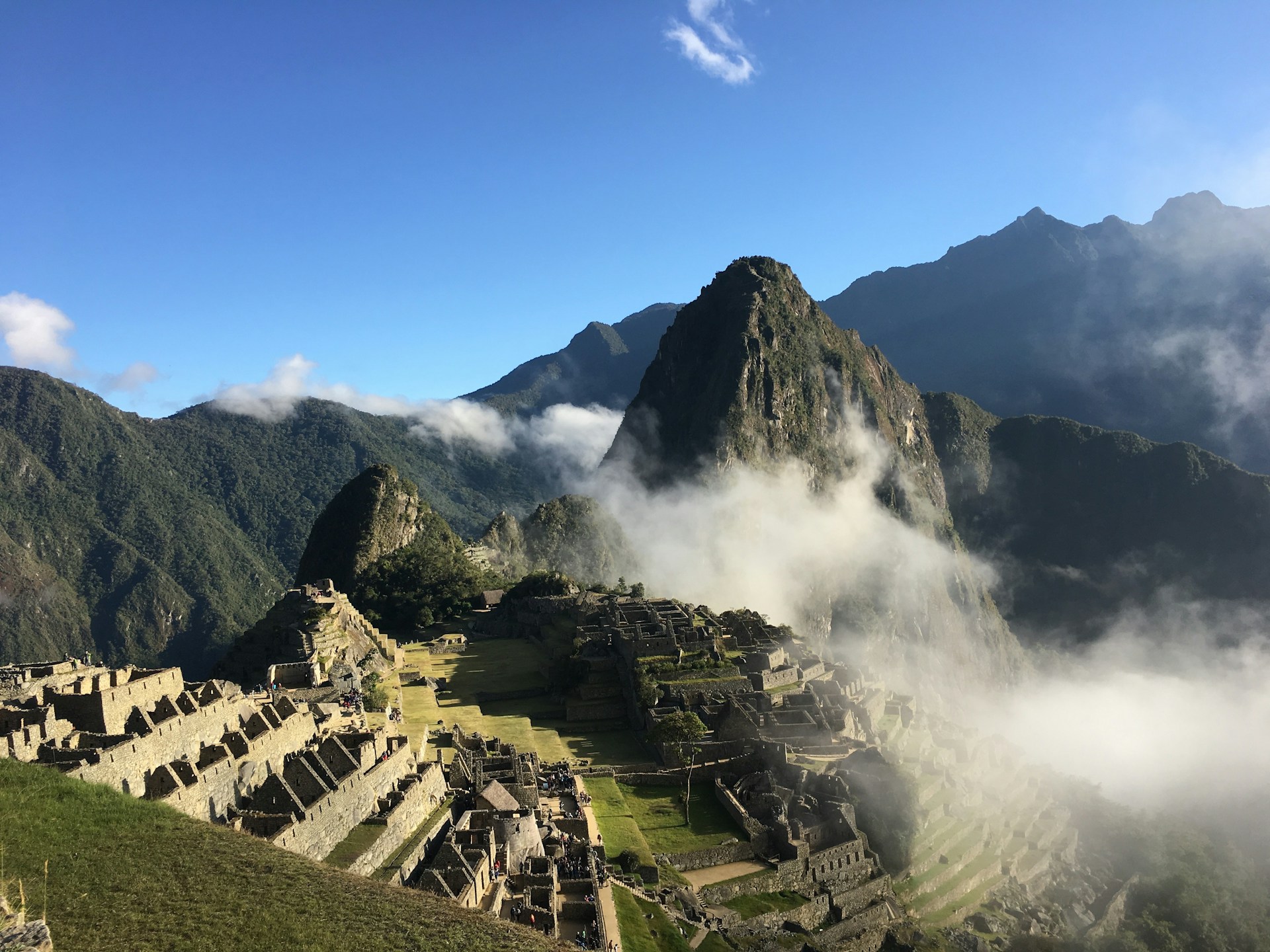
A 3:30 AM wake-up call. The final 4 km to the Sun Gate (Inti Punku) is walked in the dark by headlamp through cloud forest. The gate opens at 5:30 AM. On a clear morning, Machu Picchu appears below you through the ancient stone gateway — small at first, then expanding as the mist clears. This moment is the one every trekker remembers for the rest of their life. The guided circuit tour of Machu Picchu follows. The return to Cusco is by train from Aguas Calientes.

Classic vs Short Inca Trail: Which Is Right for You?
Not everyone has 4 days or the fitness level for the Classic Inca Trail. The Short Inca Trail 2D/1N offers the same iconic Sun Gate arrival with significantly less physical demand. Here is the honest comparison.
| Feature | Classic Inca Trail 4D/3N | Short Inca Trail 2D/1N |
|---|---|---|
| Total distance | 43 km | ~14 km |
| Duration | 4 days / 3 nights camping | 2 days / 1 night hotel |
| Maximum altitude | 4,215m — Dead Woman's Pass | ~2,700m starting altitude |
| Difficulty | Moderate–Challenging | ✓ Moderate |
| Dead Woman's Pass | Yes — Day 2 | ✓ No — bypassed entirely |
| Sun Gate arrival | ✓ Yes — dawn Day 4 | ✓ Yes — dawn Day 2 |
| Wiñay Wayna ruins | ✓ Yes | ✓ Yes |
| Accommodation | Camping — 3 nights | Hotel in Aguas Calientes |
| Archaeological sites | 6+ major sites | Wiñay Wayna + Machu Picchu |
| Permit booking | 4-6 months ahead peak season | 4-8 weeks ahead minimum |
| Price with Kontiki | From $890 pp | From $580 pp |
The Hidden Ruins: What You See Beyond Machu Picchu
One of the most underappreciated aspects of the Classic Inca Trail is that Machu Picchu is the final destination — not the only one. The trail passes through a series of Inca sites that most visitors to Peru never see because they are only accessible by hiking the trail itself. This is what makes the Classic 4-day route worth the extra effort over the Short 2-day version.

Patallaqta — Day 1
Visible from the trail on Day 1, Patallaqta (also called Llaqtapata) was a significant Inca settlement used for religious ceremonies, crop production and as a military garrison. Most trekkers pass it without realising its scale — it covers several hectares of terraced hillside. Our guides explain its function as a supply and ceremonial centre for Machu Picchu above.
Runkurakay — Day 2
A circular Inca structure at approximately 3,800m, Runkurakay served as a tambo — a rest and supply stop for the chasqui runners who carried messages across the Inca empire. The circular design is unusual in Inca architecture and its position commanding views of the valley below made it both a practical stop and a watchpoint.
Sayacmarca — Day 2
Dramatically positioned on a narrow rocky promontory, Sayacmarca is one of the most visually striking sites on the entire trail. Its name means "inaccessible town" in Quechua — the approach is via a steep narrow staircase carved directly into the cliff. Inside, the site has plazas, aqueducts and what appear to be residential and ceremonial structures. The function of Sayacmarca is still debated by archaeologists.
Phuyupatamarca — Day 3
"Town above the clouds" at approximately 3,650m. Phuyupatamarca is known for its series of ceremonial baths — six ritual fountains fed by a mountain spring that still flows today. On the mornings when cloud fills the valley below and only the peaks are visible, the name is perfectly apt. The sunrise views from here on a clear morning are extraordinary.
Wiñay Wayna — Day 3
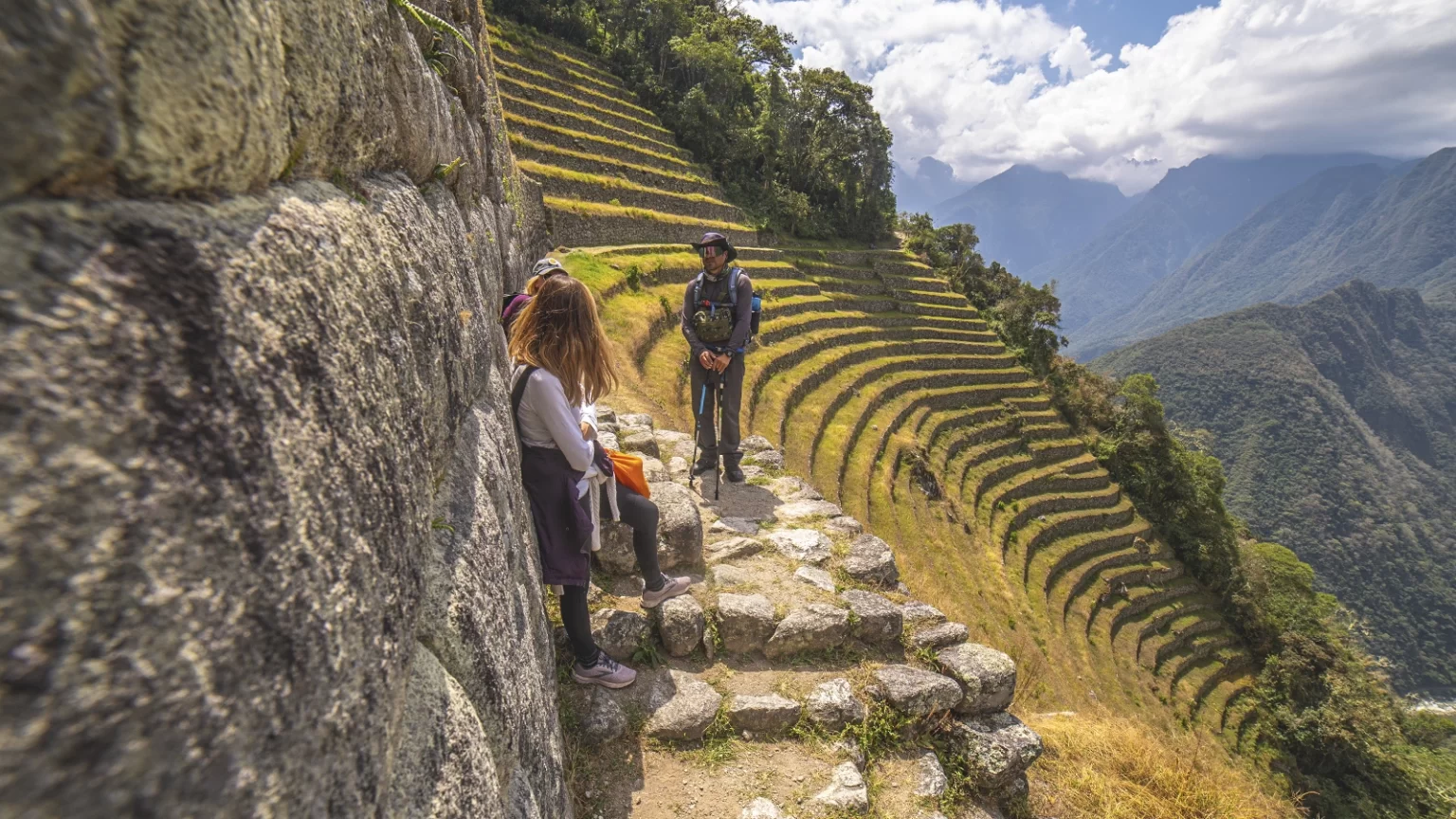
The most impressive site on the trail outside Machu Picchu. Wiñay Wayna (Quechua for "forever young") has two groups of architectural structures set among extensive agricultural terraces on a steep concave mountainside, connected by a long flight of 19 ritual fountains utilising multiple mountain springs. Most trekkers reach it late afternoon on Day 3 and camp at the adjacent lodge. Seeing this site in the late afternoon light before the final day's push to the Sun Gate is one of the quiet highlights of the entire trek.
How to Actually Train for the Inca Trail
Most training advice for the Inca Trail focuses on cardiovascular fitness. That is the wrong emphasis. Here is what our guides see separating the people who complete the trail comfortably from those who struggle.
Slow squats — go down slowly (3-4 seconds), up fast · Step-downs — single leg step down from a stair, controlled · Lunges — forward and lateral, controlled descent · Calf raises — for ankle stability on uneven stone · Trekking poles — essential, not optional. They reduce knee load by 20-30% on steep descents and will save your joints on Day 2 and Day 3.
The 12-week training plan in brief
Weeks 1-4: Build base — 3 walks per week of 1-2 hours on flat terrain. Add slow squats and step-downs 3x per week. Focus on consistency not intensity.
Weeks 5-8: Add incline — walk hills or stairs for 2 of your 3 weekly sessions. Increase to 3-hour walks on weekends with a loaded day pack (5-7kg). This simulates the load you will carry on the trail.
Weeks 9-12: Trail-specific — at least two full-day hikes with elevation gain and a loaded pack. If possible, hike at altitude — any mountains above 2,000m. Focus on the descents. Practice your trekking pole technique.

Which Inca Trail Version Is Right for You?
- You want the complete Inca Trail experience
- You have 4 days and good physical fitness
- Experiencing the archaeological sites along the trail matters to you
- You can book 4-6 months ahead for peak season
- You want to earn Machu Picchu through 4 days of hiking
- History and culture are as important as the destination
- You have limited time in Cusco
- You want the Sun Gate arrival without Dead Woman's Pass
- You are a moderate hiker not looking for an extreme challenge
- You prefer a hotel to camping
- You are still acclimatising and want a lower-altitude option
- You are doing another multi-day trek on the same trip
You handle the steps.


