Short answer: llamas and alpacas are the domesticated cousins, guanacos and vicuñas are their wild ancestors, and all four belong to the same South American camelid family — but mix them up in front of a Cusco guide and you'll get a friendly correction fast. That's the headline. The details are what actually help you tell them apart on the trail: llamas are the tall ones that carry gear, alpacas are the fluffy ones bred purely for their fleece, guanacos are the wild, reddish-brown wanderers of the high plains, and vicuñas are the shy, golden, impossibly fine-wooled animals that Peru put on its national coat of arms. This is the same breakdown our guides give clients on the trail every week, the moment someone points at a herd and asks, "wait, are those llamas or alpacas?"
The Four South American Camelids, Explained
All four animals belong to the camelid family, the same broader group as camels and dromedaries, though the South American branch split off and evolved independently in the Andes over millions of years. Two are wild, two are domesticated, and — importantly — each domestic species has one specific wild ancestor rather than being a generic "wild version" of the other.
The llama was domesticated from the guanaco, bred up in size to serve as a pack animal capable of carrying loads across steep Andean terrain. The alpaca was domesticated from the vicuña, bred for its exceptionally soft undercoat rather than its strength or size. This ancestry is the single most useful fact for keeping all four straight: llama pairs with guanaco, alpaca pairs with vicuña.
Llama vs Alpaca: The Key Differences
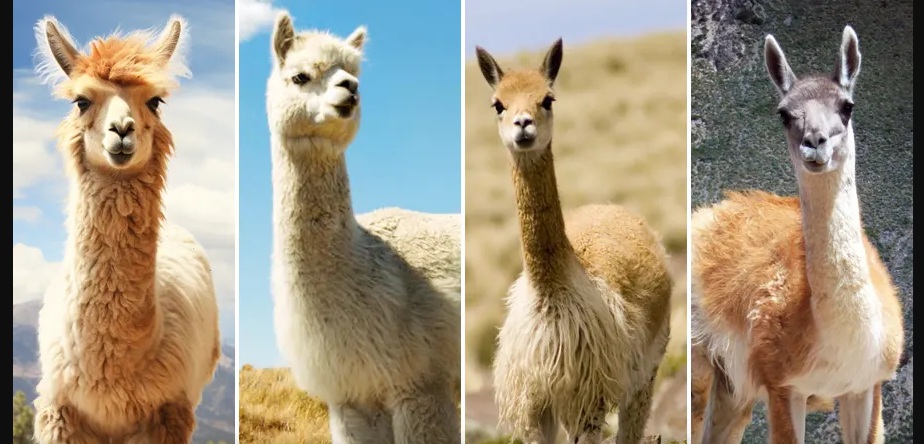
This is the comparison almost every visitor asks about, because llamas and alpacas are the two you'll actually walk past on a trek — both are common, both are friendly to photograph, and both look broadly similar to a first-time visitor. The differences, once you know them, are easy to spot at a glance.
Size. The llama is the larger animal by a wide margin, standing roughly 1.7-1.8 m tall and weighing 130-200 kg. The alpaca is noticeably smaller and more compact, standing around 90 cm at the shoulder and weighing 55-65 kg — closer to a large dog in build than to the llama's near-horse-sized frame.
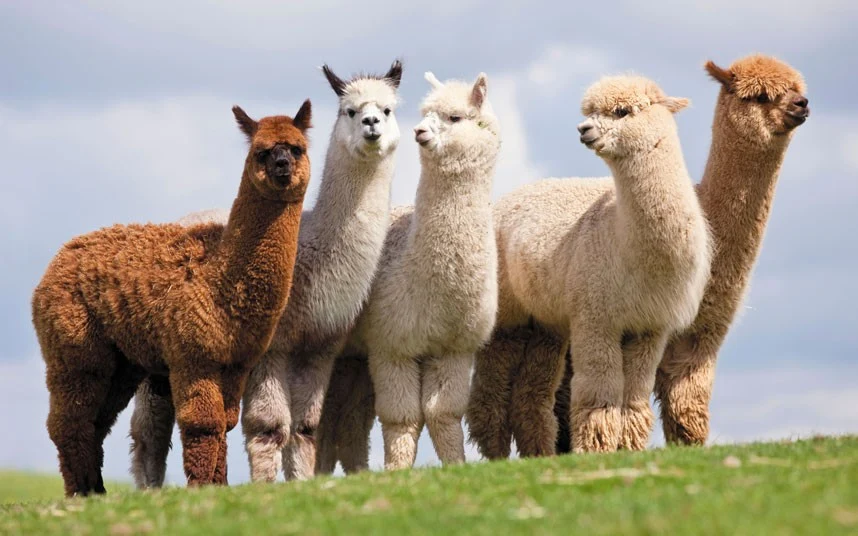
Ears. Llama ears are long, curved and banana-shaped, often described as the single fastest identifier from a distance. Alpaca ears are short, straight and spear-shaped, sitting close to a rounder head.
Face and fleece. The llama has a longer, more elongated face with a somewhat regal, aloof expression, and a coarser double coat. The alpaca has a shorter, blunter, almost teddy-bear face, often topped with a fluffy fringe, and a much softer, denser single coat that's prized for fiber.
Purpose. Llamas were bred primarily as pack and guard animals — strong enough to carry 25-30 kg of cargo over multi-day mountain routes, and still used this way by trekking outfitters and rural communities today. Alpacas were bred almost exclusively for their fiber, which is spun into some of the softest, warmest textiles in the world; they aren't built or used for carrying loads.
Temperament. Llamas tend to be more independent and can be a little more assertive, particularly males; they're also known to spit when annoyed, usually at each other rather than at people. Alpacas are generally more timid and herd-oriented, sticking close together and more likely to bolt than confront.
| Trait | Llama | Alpaca |
|---|---|---|
| Scientific name | Lama glama | Vicugna pacos |
| Wild ancestor | Guanaco | Vicuña |
| Average weight | 130-200 kg | 55-65 kg |
| Shoulder height | ~1.7-1.8 m | ~0.9 m |
| Ears | Long, curved, banana-shaped | Short, straight, spear-shaped |
| Face shape | Long, elongated | Short, blunt, fluffy |
| Primary use | Pack animal, guard animal, wool | Fiber production |
| Fiber fineness | Coarser, ~20-40 microns | Fine, ~18-30 microns |
Guanaco: The Wild Ancestor of the Llama
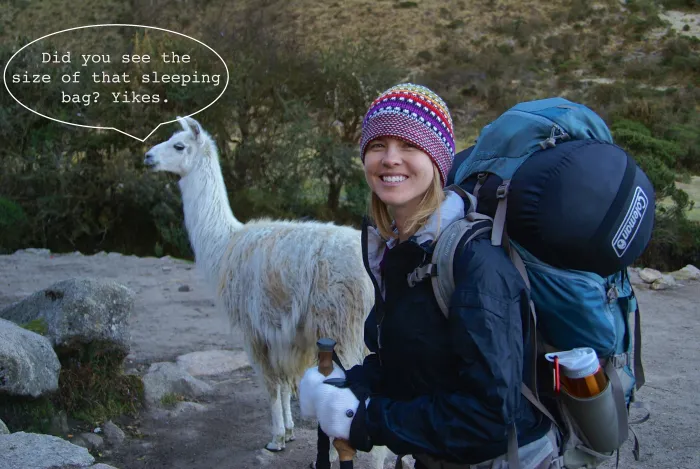
The guanaco (Lama guanicoe) is a wild camelid that has never been domesticated, and it's the animal from which the llama was bred thousands of years ago. Guanacos are built lean and athletic, weighing roughly 90-140 kg, with a reddish-brown coat, a grey face and white underparts and legs — a coloring pattern that helps them blend into open, rocky terrain.
Guanacos live in family groups led by a dominant male, typically in open steppe, high plains and rocky slopes rather than dense vegetation, ranging from southern Peru through Chile and Argentina down into Patagonia, where the largest populations remain today. They're strong runners, capable of short bursts near 55 km/h to escape predators like the puma, and they communicate with a distinctive high-pitched alarm call when a threat is spotted.
Guanaco numbers were sharply reduced by hunting and habitat loss across the 20th century, though the species as a whole is not currently considered endangered — populations in Patagonia in particular have stabilized and, in some protected areas, recovered. In Peru specifically, guanacos are far less commonly encountered than the other three camelids, and sightings are mostly limited to a handful of remote high-altitude reserves in the south of the country.
Vicuña: Peru's Rarest and Most Prized Camelid
The vicuña (Vicugna vicugna) is the smallest of the four camelids and the wild ancestor of the alpaca. It's a genuinely elegant animal — slender legs, a graceful long neck, and a golden-cinnamon coat with a distinctive white bib on the chest — and it holds a level of cultural significance the other three don't quite match: the vicuña appears on Peru's national coat of arms and is officially the country's national animal.
What makes the vicuña remarkable is its fiber. Vicuña wool measures roughly 12-14 microns in diameter, making it the finest natural fiber in the world — finer than cashmere, finer than the best alpaca fleece — which is exactly why it was so heavily poached historically that the species nearly disappeared. By the 1960s, the wild vicuña population had collapsed to an estimated 6,000 animals.
Legal protection changed that trajectory. Vicuñas are now shielded by strict international regulation, and their fiber can only be harvested through a controlled, community-run process rather than by killing the animal: local Andean communities gather wild herds in a traditional round-up known as a "chaccu," shear them humanely, and release them, with shearing permitted only once every two years per animal. That system, combined with anti-poaching enforcement, has allowed the population to recover to somewhere in the region of 200,000-350,000 animals across the Andes, with Peru holding the largest share of any country.
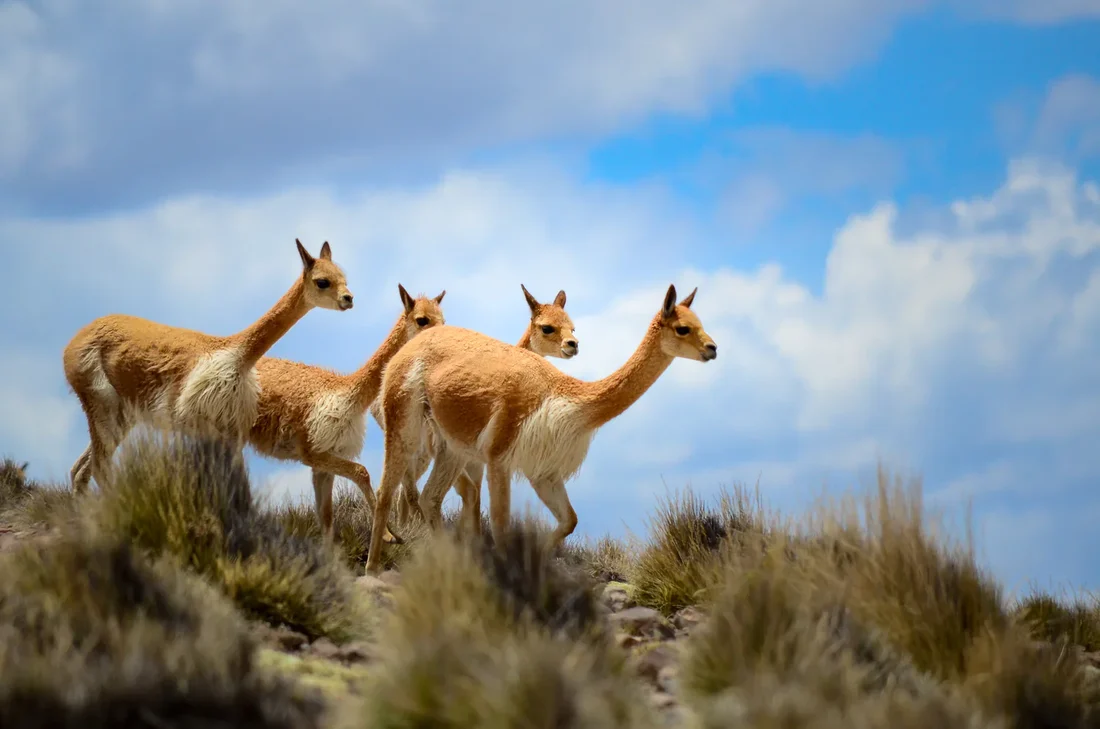
How to Tell Them Apart at a Glance
If you only remember one table from this guide, make it this one — it covers all four animals side by side, using the features that are actually visible from a trail at a normal viewing distance.
| Feature | Llama | Alpaca | Guanaco | Vicuña |
|---|---|---|---|---|
| Status | Domestic | Domestic | Wild | Wild |
| Wild ancestor / descendant | Descends from guanaco | Descends from vicuña | Ancestor of llama | Ancestor of alpaca |
| Average weight | 130-200 kg | 55-65 kg | 90-140 kg | 35-65 kg |
| Coat colour | Varies widely, often white, brown or black patchwork | Varies widely, often solid white, brown, grey or black | Reddish-brown with white underparts, grey face | Golden-cinnamon with white chest bib |
| Ears | Long, curved, banana-shaped | Short, straight, spear-shaped | Medium, pointed, upright | Small, pointed, upright |
| Fiber fineness | ~20-40 microns | ~18-30 microns | ~16-18 microns | ~12-14 microns |
| Typical habitat | Farms, villages, trekking routes | Farms, high pastures | Open steppe, high plains, Peru to Patagonia | High-altitude grassland, 4,000 m+ |
| Where in Peru | Widespread across the Andes | Widespread across the Andes | Rare, remote southern reserves | Pampas Galeras, high mountain passes |
Where to See Each One on a Trek in Peru
Llamas: almost everywhere on the trail
Llamas are the camelid you're most likely to walk directly past, since they're kept as working animals in villages throughout the Sacred Valley and along nearly every major trekking route — the Inca Trail, Salkantay, Lares and Ausangate all pass through communities that keep llama herds, and many outfitters use them as pack animals on multi-day treks.
Alpacas: pastures near villages and homestays
Alpacas graze in fenced pastures and open grassland near Andean villages, often close to homestays and community weaving cooperatives where their fiber is spun and dyed by hand. The Lares trek in particular passes through several traditional weaving communities where alpaca herds and hand-spun textiles are both easy to see up close.
Guanacos: remote southern reserves
Guanacos are the least commonly seen of the four in the Cusco region specifically. Realistic sightings in Peru are mostly limited to a small number of protected high-altitude reserves farther south; travellers hoping to reliably see guanacos in large numbers generally have better luck in Patagonia, in Chile or southern Argentina.
Vicuñas: high passes and protected reserves
Vicuñas are shy but genuinely findable on the right route. The Pampas Galeras National Reserve near Ayacucho holds the country's largest protected population, and closer to Cusco, wild vicuña herds are regularly spotted on high-altitude sections of the Ausangate circuit and around Abra Málaga, both above roughly 4,000 m. Bring binoculars if you want a closer look — vicuñas keep their distance from people far more than llamas or alpacas do.
We know exactly where to look.