Ayahuasca Ceremonies:
History, Stages & the Science Behind Them
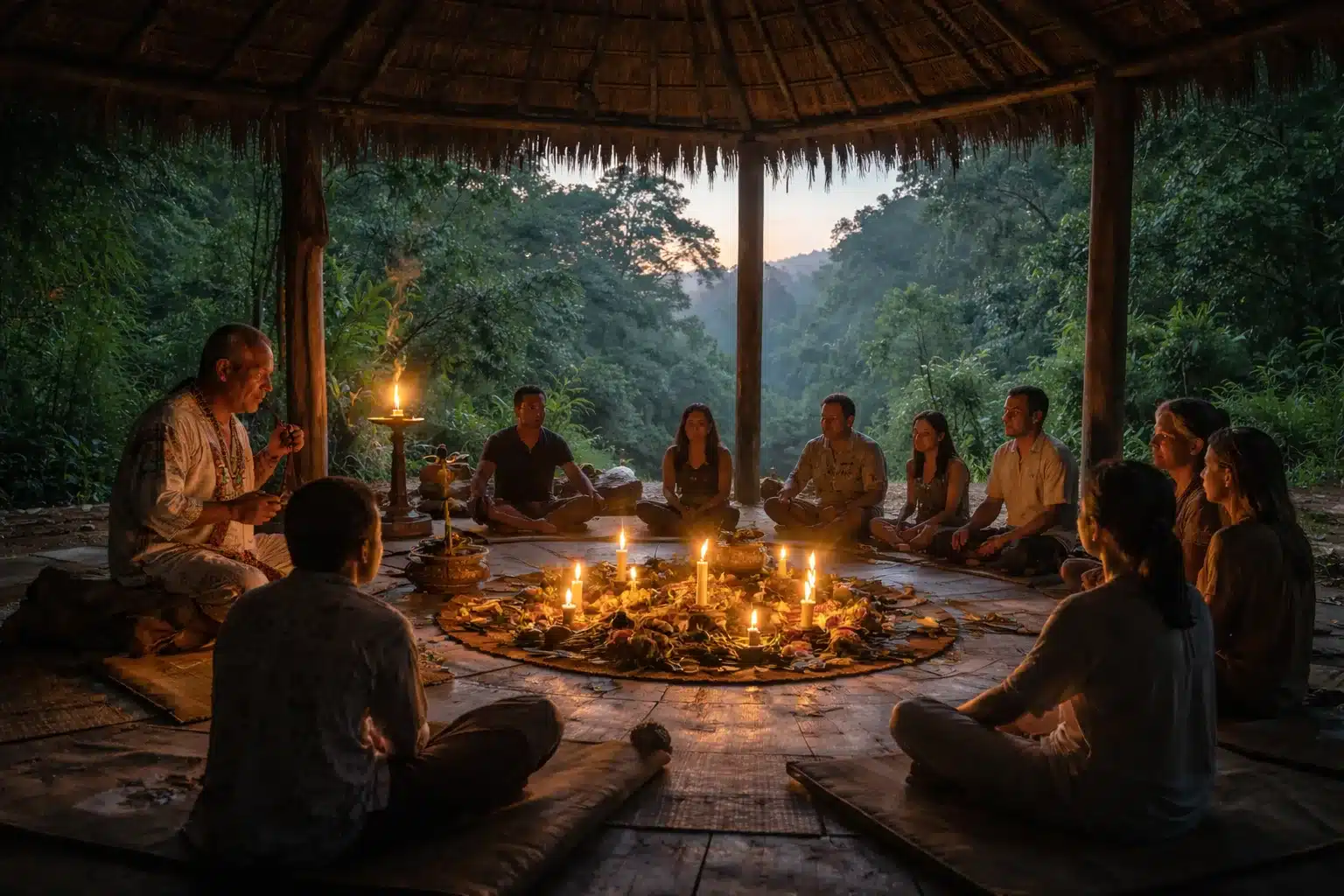
An ayahuasca ceremony is a structured, hours-long ritual built around a brewed plant medicine, led by a trained curandero (healer) through sung icaros, and it draws on a genuinely old lineage of Amazonian plant medicine practice — not, as is commonly assumed, an Inca or Andean one. That distinction matters, because most ceremonies held today in the Cusco region are themselves a deliberate modern fusion: an Amazonian ritual core, carried by healers who often travel in from the rainforest, wrapped in Andean elements borrowed from the very different highland tradition of the Inca and their descendants. This guide goes deep on both threads — the documented history, the neuroscience of what the DMT-and-MAOI combination actually does in the brain, and a stage-by-stage walkthrough of what a ceremony night looks like in practice.
Where Ayahuasca Ceremonies Actually Come From
Ayahuasca is fundamentally an Amazonian tradition. Its historical and ethnographic roots lie with lowland rainforest peoples — the Shipibo-Conibo of the Ucayali region, the Shuar and Achuar of the Ecuadorian-Peruvian border area, and the Tukano of the northwest Amazon among others — as well as with vegetalismo, a mestizo healing tradition that developed in and around Iquitos, blending indigenous plant knowledge with elements introduced through colonial contact. This is worth stating clearly because it's commonly and incorrectly assumed that ayahuasca is an "Inca" practice. It isn't, historically. The Inca Empire and the broader highland Andean cultures had their own, quite different, ceremonial plant tradition, historically centred on huachuma (San Pedro cactus, containing mescaline), coca leaf, and ritual offerings to Pachamama (Mother Earth) and the Apus (mountain spirits) — practices tied to the high Andes rather than the rainforest.
Written accounts of ayahuasca use by Spanish missionaries date back several centuries, generally describing it with suspicion or outright hostility — colonial religious authorities frequently characterised the practice as diabolic and worked to suppress it. Archaeological evidence pushes the timeline further back still: researchers recovered a ritual bundle in a cave in southwestern Bolivia containing residues of multiple psychoactive plants, radiocarbon-dated to roughly 1,000 years old, suggesting the ceremonial use of psychoactive plant preparations in the wider Andes-Amazon region considerably predates any written record — though tracing the exact continuous lineage of today's specific ayahuasca brew back that far isn't something the archaeological record can establish with precision.
From Suppression to Global Interest: A Short Modern History
Ayahuasca practice persisted through the colonial period largely within indigenous and mestizo communities, away from official scrutiny. The 20th century brought a documented revival and, eventually, globalisation. In 1930s Brazil, syncretic religious movements — most notably Santo Daime and, later, União do Vegetal — formed around ceremonial ayahuasca use blended with Christian symbolism and liturgy, developing into organised churches that continue today and have, in some jurisdictions, secured legal recognition for ceremonial use. From the 1990s onward, and accelerating sharply through the 2000s and 2010s, international interest in ayahuasca grew substantially, driven by a mix of academic research attention, popular media coverage, and the rise of dedicated retreat tourism centred on two Peruvian hubs in particular: Iquitos, in the heart of the Amazon, and — somewhat later — Cusco and the Sacred Valley, in the Andean highlands.
That second hub is the more historically unusual one, and it's the direct reason so many ceremonies today carry a blended character. Cusco is not, historically, ayahuasca territory — it's the former Inca capital, deep in Andean cultural terrain. Retreat centers based there generally work by bringing Amazonian curanderos, often Shipibo healers, to travel to the highlands, while layering the ceremony itself with Andean ritual elements more native to the region a guest is actually visiting. It's a genuine, fairly recent cultural synthesis, built by real practitioners from both traditions working together — not a single unbroken ancestral line, and reputable centers are generally candid about that distinction rather than presenting it as one uninterrupted "Inca ayahuasca" tradition.
The Science: What's Actually Happening in the Brain
Pharmacologically, an ayahuasca ceremony depends on a specific two-plant combination: the Banisteriopsis caapi vine, rich in harmala alkaloids (harmine, harmaline and tetrahydroharmine), and the leaves of a DMT-containing plant, most often Psychotria viridis. DMT taken alone has essentially no oral effect, because the enzyme monoamine oxidase (MAO) in the human gut breaks it down almost immediately. The harmala alkaloids in the vine temporarily and reversibly inhibit that enzyme, which is what allows the DMT from the second plant to reach the bloodstream and cross into the brain — the entire ritual depends on this specific pharmacological pairing.
Once active, DMT primarily binds to the serotonin 5-HT2A receptor, the same receptor targeted by classic psychedelics such as psilocybin and LSD, along with secondary activity at the sigma-1 receptor. Neuroimaging research — largely fMRI and EEG studies conducted over the past 15 years, including work from research groups such as Imperial College London's Centre for Psychedelic Research — has found that this receptor activity is associated with reduced activity and connectivity within the brain's default mode network, a set of interconnected regions linked to self-referential thought, mind-wandering and the maintenance of a stable sense of self. EEG recordings during the experience also show increased gamma-band activity, which researchers have linked to the intense visual imagery participants commonly report.
Neuroscientist Robin Carhart-Harris and colleagues have proposed frameworks such as the REBUS model ("relaxed beliefs under psychedelics") to explain how this altered brain state might relate to the subjective loosening of habitual thought patterns that many participants describe. It's worth being precise about the limits of this research: it's genuinely active and expanding, but it remains largely observational and exploratory rather than settled clinical science, and ayahuasca is not an approved medical treatment for any psychiatric condition. Retreat centers that overstate specific clinical outcomes are overstating what the current evidence actually supports.
| Component | Plant source | Primary mechanism |
|---|---|---|
| DMT | Psychotria viridis (chacruna) leaves | Agonist at serotonin 5-HT2A / sigma-1 receptors |
| Harmala alkaloids | Banisteriopsis caapi vine | Reversible MAO-A inhibition, enabling oral DMT activity |
| Tetrahydroharmine (THH) | Banisteriopsis caapi vine | Mild serotonin reuptake inhibition |
The Stages of a Traditional Ayahuasca Ceremony
Ceremonies vary somewhat between traditions and individual curanderos, but the overall arc is consistent across most Peru-based retreats. Here is the structure in detail.
1. Preparation and dieta (days to weeks before)
Participants are typically asked to follow a simplified version of the traditional dieta before arriving: avoiding alcohol, pork, excess salt and sugar, and sexual activity for a period beforehand. In traditional vegetalismo, this extends much further — apprentice curanderos undertake extended dietas of weeks or months, often isolated in the forest and centred on a single master plant, as the primary way healing knowledge and icaros are said to be received.
2. Setting intentions and opening
On the night of the ceremony, participants gather in the maloca (the traditional round ceremonial structure), each with an individual mat, blanket, bucket and water. The curandero opens with a meditation and an opening icaro, and participants are often invited to silently set an intention for the night.
3. Serving the medicine
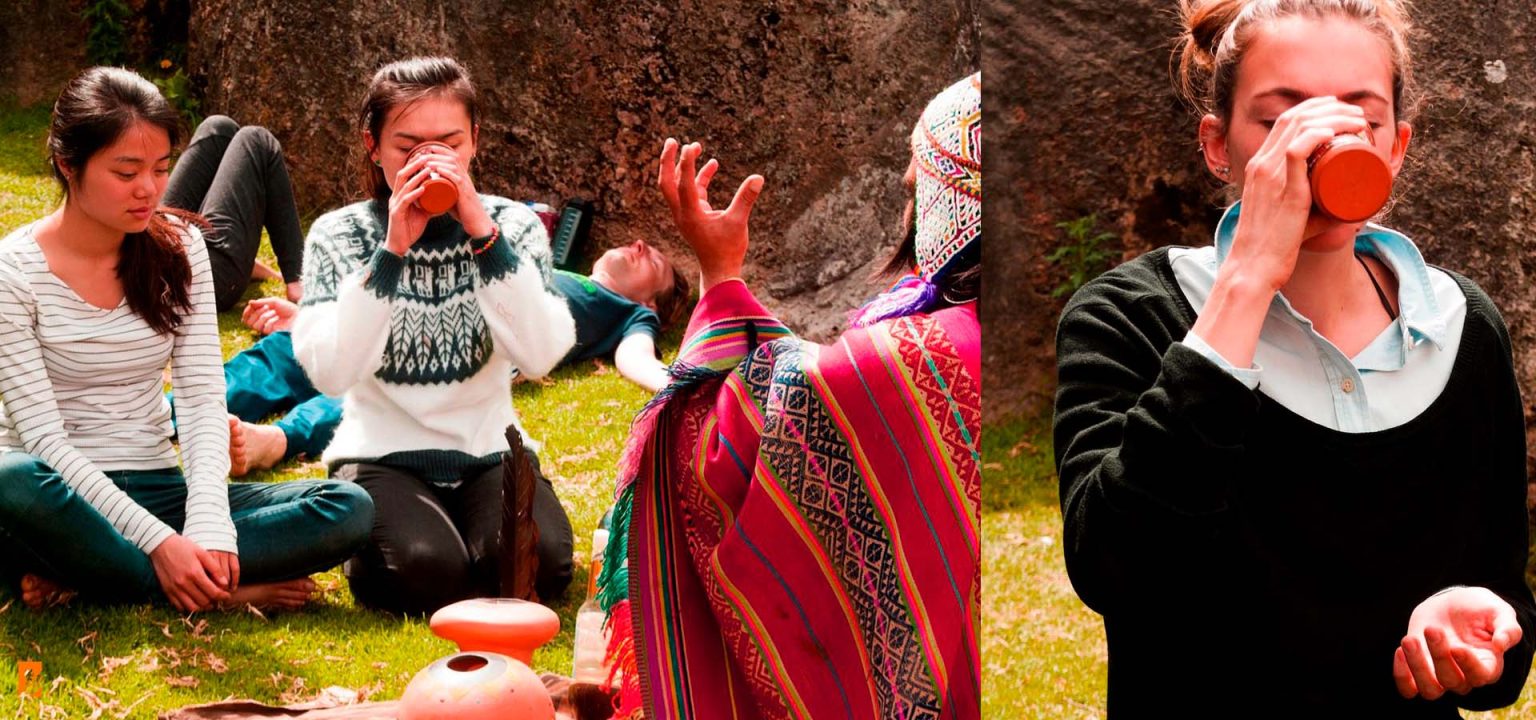
The medicine is served individually, one participant at a time, typically in a specific order determined by the curandero, with the amount calibrated based on the earlier medical and psychological screening as well as the individual's prior ceremony experience.
4. Onset (roughly 30-60 minutes)
Effects generally begin gradually over the half hour to hour after drinking, often starting with physical sensations and a shift in visual perception before the more intense visionary phase begins.
5. Peak and visionary phase
This is the longest phase of the ceremony, often lasting two to three hours, during which the curandero sings icaros nearly continuously, sometimes accompanied by a chakapa (a rattle made of bundled leaves) used rhythmically over participants. Facilitators describe the icaros as actively steering the intensity and direction of the group's experience during this phase.
6. Purging
Nausea, vomiting and sometimes other forms of physical purging are extremely common during this phase and are traditionally understood as "la purga" — an intentional, even welcomed, part of the process rather than a side effect, often described by curanderos as a physical and energetic release running alongside the psychological one.
7. Closing
As the effects gradually fade, typically by the four-to-six-hour mark, the curandero closes the ceremony with final icaros, and participants are given space to rest, often falling asleep on their mats before returning to their rooms.
8. Integration
The following morning typically includes a group sharing circle, giving participants a chance to voice what came up during the night, often followed by a rest day before the next ceremony. Most experienced facilitators consider this integration step — both the immediate morning-after conversation and longer-term reflection afterward — as important to the overall process as the ceremony itself.
Icaros: The Sacred Songs That Structure the Ceremony
Icaros are the traditional medicine songs sung by curanderos throughout a ceremony, and within Amazonian vegetalismo they are treated as far more than accompaniment — practitioners describe them as an active tool used to call in specific energies, shift the intensity of the room, or work with a particular participant's experience in real time. Icaros are traditionally understood to be received rather than composed: a healer's own dieta and apprenticeship, often involving isolation and a restricted diet centred on a specific plant teacher, is described as the process through which new icaros are learned. Language varies by tradition and lineage, sometimes in Spanish, sometimes in an indigenous language, sometimes in vocalisations without conventional words at all.
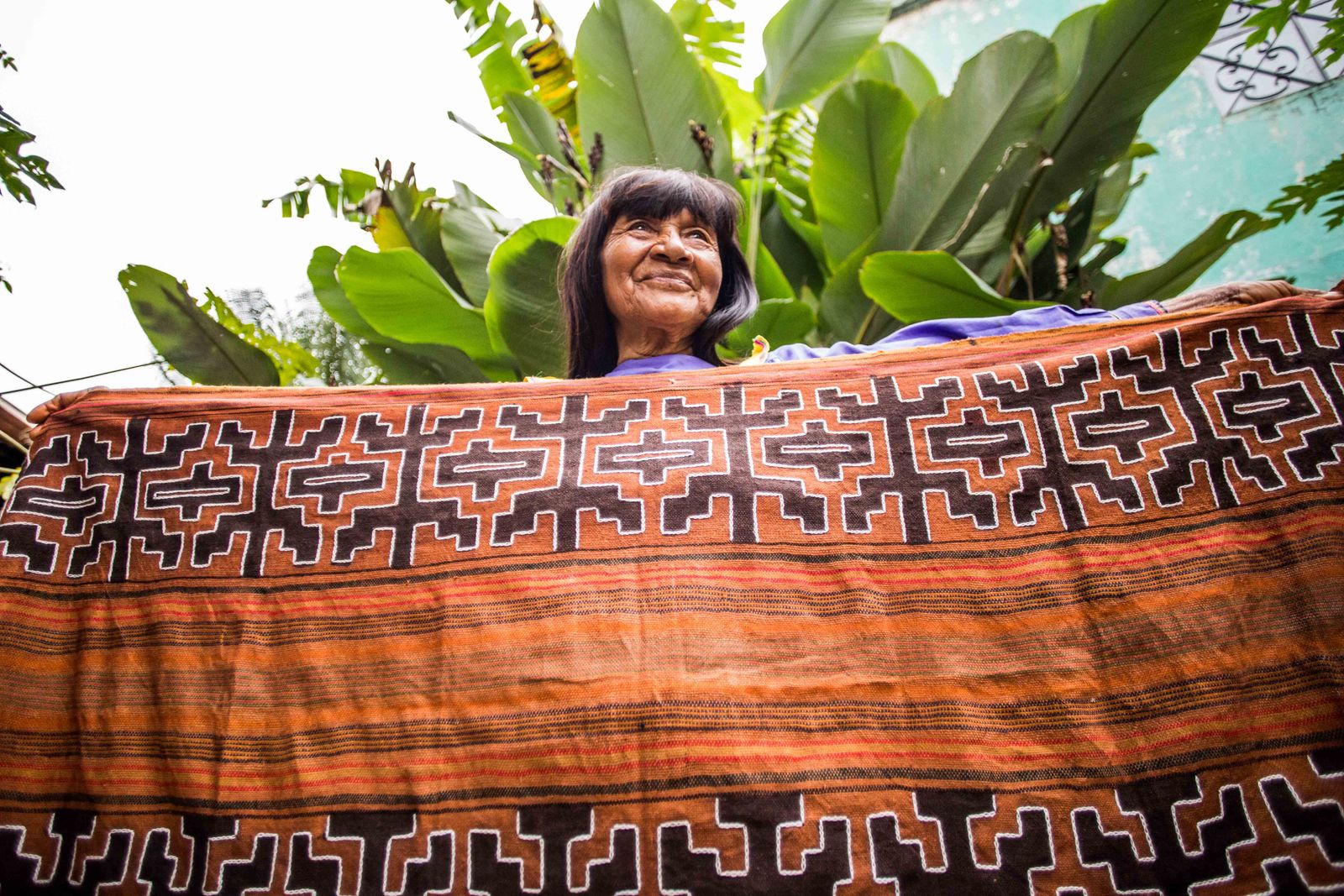
Among the Shipibo-Conibo specifically, icaros are closely linked to kené, the geometric visual patterns that appear throughout Shipibo textiles, ceramics and body painting. Practitioners describe a synesthetic relationship between the two: the visual geometry of kené and the melodic structure of icaros are understood as different expressions of the same underlying pattern, sometimes described as the visual "shape" of a song translated into cloth or paint.
The Andean Layer: What Cusco-Based Retreats Add
Because so many retreats operate from the Sacred Valley rather than the Amazon itself, it's common for the Amazonian ceremony core to be framed within genuinely Andean ritual elements, drawn from a tradition that has nothing to do with ayahuasca historically but everything to do with the region a guest is physically in. The most common of these is the despacho, a ceremonial offering bundle assembled from flowers, seeds, sweets and other symbolic items, presented as a gift to Pachamama and the Apus, often performed the day before or after a ceremony as a separate ritual in its own right. Coca leaf reading, a divinatory practice used by Andean priests (paqos) for guidance and blessing, is another element frequently folded into a retreat's broader program alongside the ayahuasca ceremonies themselves.
None of this is a fabrication — Q'ero paqos from the high Andes are real practitioners of a real, living tradition, and many retreat centers work directly with them. But it is a modern combination, assembled deliberately over the past few decades rather than inherited as a single continuous practice, and it's worth understanding as exactly that: two distinct, genuine indigenous traditions — one Amazonian, one Andean — brought into intentional dialogue in a specific place, Cusco, that historically belonged to neither.
Ask our local team before you book.

