Cusco Markets:
San Pedro, Pisac & Chinchero
Short answer: San Pedro Market is Cusco's essential in-city stop — a 19th-century food hall a 10-minute walk from Plaza de Armas. Pisac and Chinchero, both in the Sacred Valley about an hour outside the city, take the market experience further: Pisac pairs one of Peru's most famous artisan markets with an impressive Inca archaeological site above the town, while Chinchero is the region's living center for traditional hand-weaving. This guide covers what to buy and eat at each, realistic hours and prices, and how to get to all three.
Three Markets, Two Very Different Trips
Cusco's markets split naturally into two categories: what's walkable from the city, and what's worth a Sacred Valley day trip. San Pedro covers the first — big, central, and reachable on foot in ten minutes. Pisac and Chinchero cover the second, both about an hour outside Cusco in the Sacred Valley, and both usually visited together as part of the same day out. Pisac gives you Peru's most famous artisan market paired with genuinely impressive Inca ruins above the town; Chinchero gives you the region's living weaving tradition, where the textiles are made in front of you before you buy them.
San Pedro Market: Cusco's Essential Food Hall
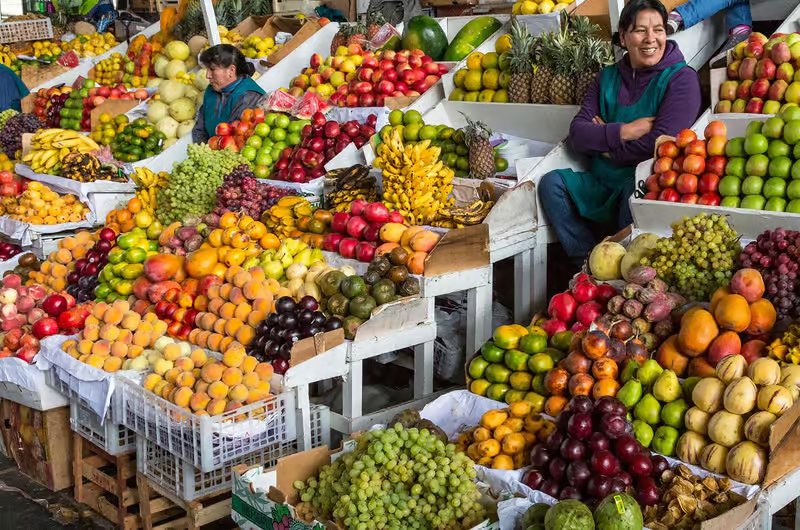
San Pedro is the oldest and most famous market in Cusco city itself, and its iron-framed hall is often attributed to Gustave Eiffel, the French engineer behind the Eiffel Tower, who worked on structures across Latin America in the same era. It sits just a few blocks from Plaza de Armas on Cascaparo Avenue, and it's genuinely worth the full hour or two most guides recommend.
The market splits roughly into zones: fresh produce and flowers near the entrances, a dedicated dairy section known for local cheeses like Andino and Paria, the famous juice aisle where vendors blend fresh fruit to order in glasses large enough to share, and a food hall serving Cusco classics like rocoto relleno, chairo soup, and chicharrón. Textiles, everyday souvenirs, and a genuinely surprising range of household goods fill out the rest of the space.
The best food and juice stalls open around 6:30 AM, and the market runs until roughly 5:30-6:00 PM. It gets noticeably busier between noon and 2 PM, so arriving mid-morning gives you the calmest experience. Cash is essential — very few vendors accept cards.
Pisac Market: The Sacred Valley's Most Famous Market
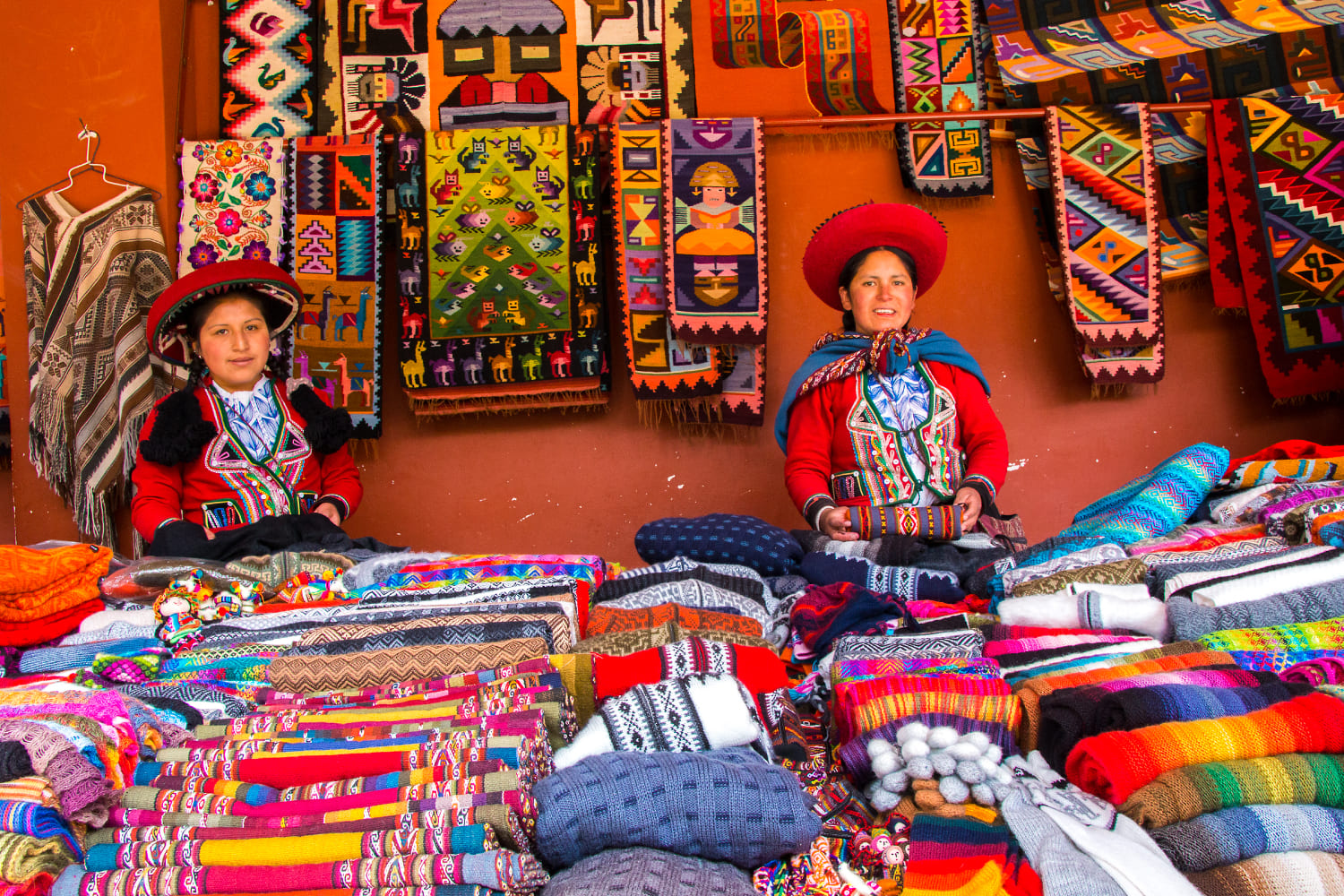
Pisac sits about 33 km from Cusco — roughly 45 minutes to an hour by taxi, shared colectivo van, or as part of an organized Sacred Valley tour — and its market, right on the town's colonial plaza, is one of the most photographed in Peru. A large tourist-facing section covers hand-woven blankets and shawls, silver jewelry, ceramics, alpaca garments, ponchos, hats, and Andean instruments, while a separate food section serves fresh produce, empanadas, tamales, and — worth trying if you're curious — chicha, the traditional Andean corn drink.
The market itself runs daily, generally 9:00 AM to 4:30 PM, but Sunday has been Pisac's traditional market day for generations, when Quechua-speaking communities from surrounding highland villages historically came down to trade goods and stock up on supplies for the week. Some recent visitors note the market feels similarly busy and tourist-oriented every day now, so don't feel you have to force a Sunday visit — but if your schedule allows it, Sunday still tends to have the liveliest atmosphere.
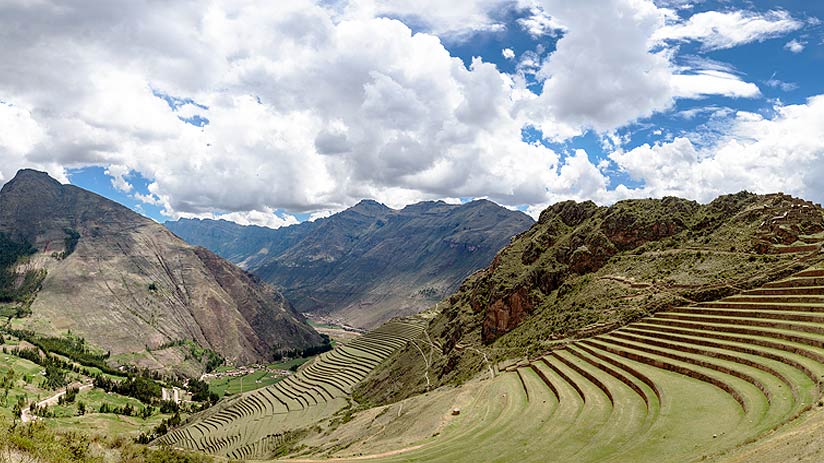
Above the market and town, the Pisac archaeological park holds some of the finest Inca stonework outside Machu Picchu itself — ceremonial baths, a sun temple carved directly into volcanic rock, and the largest known Inca cemetery in South America, spread across terraced hillsides with sweeping valley views. Entry requires Peru's Boleto Turístico (tourist ticket); the market itself is free to browse.
Chinchero: Where the Textiles Are Actually Made
Chinchero sits about 30 km from Cusco, at roughly 3,762 meters — genuinely higher altitude than Cusco itself, worth keeping in mind if you're visiting early in your trip. Unlike San Pedro or Pisac, Chinchero's real draw isn't a sprawling market so much as its living weaving tradition: cooperatives throughout town demonstrate the full process of cleaning, spinning, and naturally dyeing alpaca wool using techniques passed down through generations, then weaving it into textiles right in front of visitors.
This makes Chinchero the single best place in the Cusco region to buy textiles with genuine, verifiable provenance — you can watch exactly how a piece is made before you decide to buy it, which sidesteps the "maybe alpaca" problem that plagues so much of the wider souvenir market. Prices are generally affordable given the handmade quality, and while the town has a market most days of the week, Sunday remains the busiest and most traditional day to visit, similar to Pisac. Chinchero also has its own archaeological site and a striking colonial church built over Inca foundations, both covered by the same Sacred Valley tourist ticket that covers Pisac.
Cusco's Markets at a Glance
| Market | Distance from Cusco | Best for | Hours (approx.) | Vibe |
|---|---|---|---|---|
| San Pedro | ~10 min walk | Food hall, juice, souvenirs, textiles | 6:00 AM - 5:30/6:00 PM | Big, central, mix of tourists and locals |
| Pisac | ~45-60 min by road | Artisan market + major Inca ruins | 9:00 AM - 4:30 PM daily; Sunday busiest | Colorful, touristy, paired with archaeology |
| Chinchero | ~45-60 min by road | Authentic, verifiable hand-woven textiles | Most days; Sunday busiest | Living-craft, higher altitude, quieter than Pisac |
Hours vary by stall, season, and tour schedules — treat these as a planning guide.
We'll help you fit Pisac, Chinchero & more in.
Practical Tips for Visiting These Markets
Bring cash, in small bills
Almost no market vendor accepts cards, whether in Cusco city or the Sacred Valley. Our Peru currency guide covers exchange tips and how much to carry.
Haggle for crafts, not for food
Bargaining is a normal, expected part of buying textiles and souvenirs at all three markets — don't feel awkward about it. Food and produce prices are generally fixed.
Buy your Boleto Turístico before you go
If you want to see the ruins at Pisac or Chinchero, buy the Sacred Valley partial ticket in Cusco ahead of time rather than hoping to purchase it on arrival — it isn't sold online, so plan the stop into your day.
Watch the altitude at Chinchero
At roughly 3,762 meters, Chinchero sits higher than Cusco itself. If you've just arrived in the region, take it easy on the walking and save Chinchero for a day or two into your acclimatization.
Pair This With Cusco's Restaurants & Alpaca Shopping
A lot of what ends up on Cusco's restaurant menus starts at markets like these, covered in our Cusco restaurants guide. If you're shopping for alpaca on this trip, Chinchero's weaving cooperatives are one of the most reliable sources of authentic textiles anywhere in the region — but for the full picture of how to tell real from fake wherever you're buying, see our alpaca wool shopping guide.
Conclusion
San Pedro, Pisac, and Chinchero each give you a genuinely different market experience, and together they cover almost everything worth buying in the Cusco region. If you only have a morning in the city, San Pedro alone is a complete experience. With a full day free for the Sacred Valley, pairing Pisac's market-and-ruins combination with Chinchero's living weaving tradition rounds out a much fuller picture of how the region shops, trades, and makes things by hand.
Questions about fitting the markets into your Cusco itinerary? Get in touch with our team, or explore the rest of our guides on our homepage.