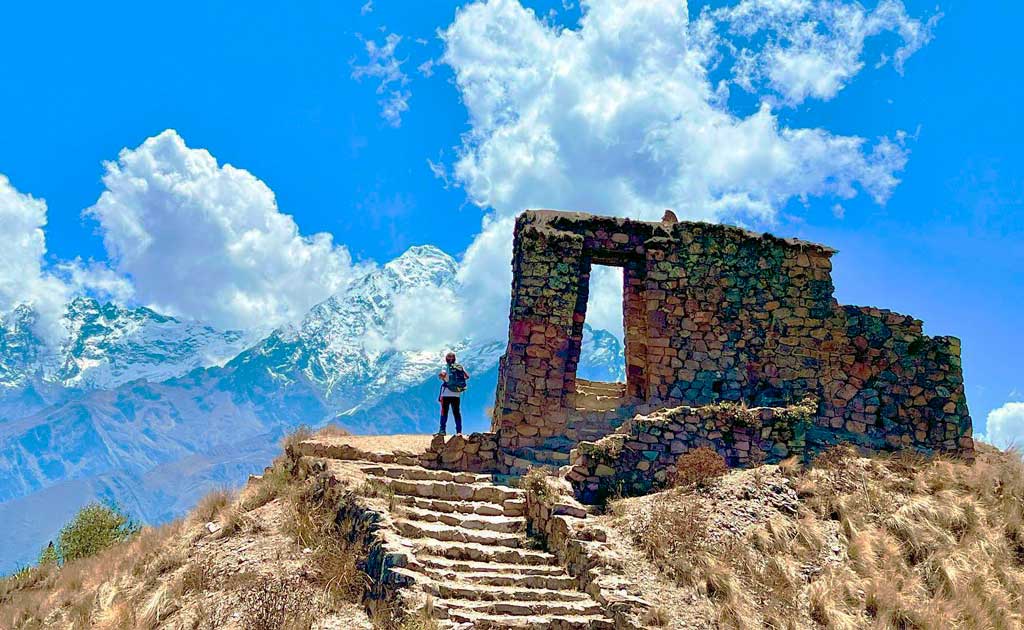
Short answer: Machu Picchu is Peru's most visited site and one of the most tightly managed archaeological sites on earth, and in 2026 that management means fixed circuits, timed entry tickets, and permits that need to be sorted out before almost anything else in your trip. More than 1.5 million international visitors now travel to this 15th-century Inca citadel every year. This guide covers where it came from, what it actually costs to get in this year, every realistic way to reach it, how to handle the altitude, where to sleep nearby, and the questions we hear most often from travelers planning their first visit.
What Is Machu Picchu, and Why Does It Still Matter?
Machu Picchu is a 15th-century Inca citadel perched on a narrow mountain saddle between two peaks, Machu Picchu and Huayna Picchu, high above a hairpin bend in the Urubamba River. It's often called the "Lost City of the Incas," though that title technically belongs to a different, still-unlocated site — Machu Picchu was never truly lost so much as unknown to the outside world, while local farming families in the valley knew roughly where it was long before it became a destination.
What makes it worth the planning headache described in this guide isn't just the setting, dramatic as it is. It's the density of what's packed into a relatively small site: precision dry-stone architecture built without mortar, agricultural terraces engineered for a mountainside with almost no flat ground, and a layout that still reveals new details to archaeologists working there today. It's also, unavoidably, one of the most popular places on the continent to visit, which is exactly why Peru's government now manages access as tightly as it does.

History: How Machu Picchu Was Built — and Found
A royal estate, not a lost city
Most archaeologists agree that Machu Picchu was built as a royal estate for Pachacuti, the ninth Inca emperor, who ruled from roughly 1438 to 1472 and drove much of the empire's expansion beyond the Cusco valley. Construction is generally dated to somewhere between 1450 and 1470, based on radiocarbon evidence, since no written Inca records of the project survive. The site likely served several purposes at once: a retreat where the emperor and his family could host ceremonies and administer imperial affairs, a religious center aligned with nearby peaks and the sun's movement, and a claim to land that would remain in Pachacuti's family line after his death. At its peak, it's thought to have supported a population of a few hundred to around 750 people, including nobility, priests, and the support staff who kept the estate running.
Abandonment and the myth of the "lost city"
Machu Picchu was abandoned sometime around the Spanish conquest of the 1530s to 1560s, likely as the Inca Empire collapsed and its population scattered or was redirected elsewhere. Because the Spanish never found it, the citadel escaped the deliberate destruction that erased so many other Inca sites, which is a large part of why its stonework survives as intact as it does today. It was never entirely "lost," though — local Quechua-speaking families in the valley continued to know roughly where it was, and a farmer reportedly guided a Peruvian explorer, Agustín Lizárraga, to the site as early as 1902, nearly a decade before it became internationally famous.
Hiram Bingham and the 1911 "discovery"
The name most associated with Machu Picchu is Hiram Bingham, an American historian and explorer whose 1911 Yale-backed expedition, supported by the National Geographic Society, brought the site to international attention for the first time. Bingham was actually searching for Vilcabamba, the Incas' last refuge from the Spanish, when local guides led him to Machu Picchu instead. His photographs and subsequent expeditions turned the citadel into a global symbol of the Inca Empire almost overnight, even though, as the Lizárraga visit shows, he wasn't the first outsider to see it and the site was never a secret to the people living around it.
From national sanctuary to global icon
Peru declared Machu Picchu a Historical Sanctuary in 1981, and UNESCO inscribed it as a World Heritage Site in 1983, recognizing both its archaeological significance and the surrounding cloud-forest ecosystem it sits within. In 2007, a global internet poll named it one of the New Seven Wonders of the World, cementing its place alongside sites like Petra and the Great Wall in popular imagination. That recognition is a large part of why visitor numbers have climbed to over 1.5 million a year today — and why the ticketing system covered in the next section exists in the first place.
Machu Picchu Circuits & Permits: The 2026 System
If you're booking a visit this year, the circuit system is the first thing to understand, because choosing wrong can mean missing the parts of the site you actually came to see. Peru's Ministry of Culture splits entry into fixed circuits with set routes through the site, and each ticket only grants access to one.
Circuit 1 is the Panoramic upper route. It takes you past the agricultural terraces and the Caretaker's Hut for the sweeping, elevated view that appears in almost every postcard, but it does not pass through the core ruins.
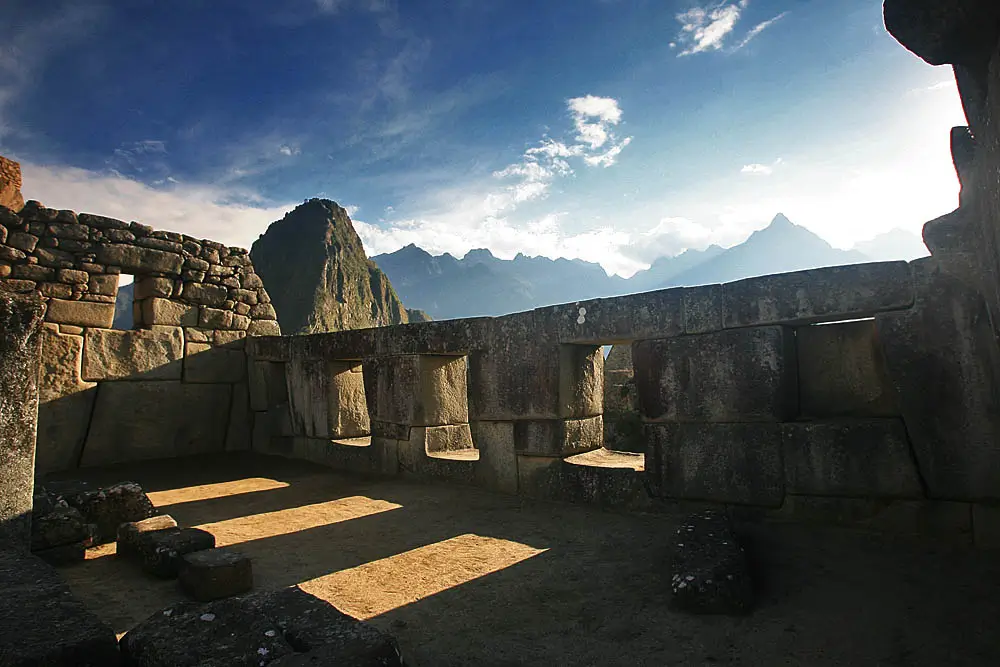
Circuit 2 is the Classic route through the heart of the citadel, including the Temple of the Sun, the Intihuatana Stone, and the Main Plaza. Most first-time visitors want Circuit 2 for exactly this reason — it's the route that actually walks you through the buildings rather than viewing them from above.
Every ticket comes with a fixed entry time and a strict multi-hour limit inside the sanctuary once you pass through the gate, with no re-entry permitted after you exit. That limit is part of how the site manages daily crowding, alongside a hard daily visitor cap that Peru's Ministry of Culture adjusts seasonally.
Choosing your circuit before you book anything else saves you from the most common planning mistake we see at Kontiki Hikes: booking an Inca Trail permit or a train ticket that ends at the wrong circuit for what you actually wanted to experience.
Circuit 2A vs 2B: choosing the right classic route
Within Circuit 2, there's a further split between sub-routes 2A and 2B that trips up a lot of travelers. Both pass through the core ruins, but the pacing and viewpoints differ enough to matter for photographers and slower walkers. We break down the exact differences, including which sub-route pairs best with a Huayna Picchu or Machu Picchu Mountain climb, in our dedicated Circuit 2A vs 2B comparison. For the full breakdown of how the wider permit and circuit changes affect your booking, see our Circuit 1 vs Circuit 2: Permit Changes 2026 guide.
Tickets & Pricing: What Machu Picchu Actually Costs in 2026
Ticket prices are set in Peruvian Soles by the Ministry of Culture and periodically revised — 2026 has already seen one scheduled increase partway through the year, so treat the figures below as a planning guide rather than a guarantee, and confirm the current rate on the official Machu Picchu website before you book.
| Ticket type | Approx. price (early 2026) | Approx. price (from May 2026) | Notes |
|---|---|---|---|
| Standard circuit (Circuit 1 or 2) | ~152 PEN / ~$40 USD | ~163 PEN / ~$52 USD | Foreign adult rate; discounts apply for Peruvian and Andean Community nationals |
| Circuit + Huayna Picchu | ~200 PEN / ~$52 USD | ~211 PEN / ~$65 USD | Only 200 permits released per day — books out fastest |
| Circuit + Machu Picchu Mountain | ~200 PEN / ~$52 USD | ~211 PEN / ~$65 USD | Higher daily cap than Huayna Picchu, stays available later in the season |
| Inca Trail permit | Priced and booked separately | Priced and booked separately | Includes Circuit 1 entry on arrival day; a return visit the next day needs its own ticket |
Figures rounded from Peru's Ministry of Culture pricing schedule as of early 2026 (Ministerial Resolution N°000451-2024-MC). Card payments typically add processing fees on top of the listed rate. Last checked August 2026 — we revisit this table every season, but always cross-check the official site before you pay.
Where and when to book
Tickets are sold through the official Ministry of Culture portal and a small number of authorized resellers; as of 2026, same-day ticket sales at the entrance gate are no longer available, so everything needs to be arranged in advance. For the standard classic circuit, booking three to six weeks ahead is usually enough outside of peak season. For Huayna Picchu specifically, aim for two to three months ahead, and longer if your travel dates fall in the June-to-August peak. Low season (roughly November through March, excluding the holiday weeks) is far more forgiving and sometimes bookable just days out.
A valid passport is required at entry, matching the exact document number used when you booked — no substitutions are permitted after purchase, so double-check this detail before you submit payment.
How to Get to Machu Picchu: Every Route Compared
There's no road to Machu Picchu itself — every route ends either by train into Aguas Calientes followed by a short bus or walk up to the gate, or by trekking in on foot over several days. Here's how the main options stack up.
| Route | Duration | Difficulty | Permit needed | Best for |
|---|---|---|---|---|
| By train | 1 day | None — no hiking required | No trek permit, just your MP entrance ticket | Time-limited travelers, families, anyone skipping the trek |
| Short Inca Trail (2D/1N) | 2 days | Moderate | Limited permit, same pool as Classic Trail | A taste of the trail experience without the full 4-day commitment |
| Classic Inca Trail | 4 days | Moderate-challenging | Limited to ~500/day incl. guides & porters | The full historic-route experience, arriving on foot through the Sun Gate |
| Salkantay Trek | 5 days | Challenging (higher pass) | No limited permit | Bigger mountain scenery, fewer crowds, no permit scramble |
By train
The fastest and least physically demanding option: a scenic train ride from the Sacred Valley or Cusco into Aguas Calientes, followed by a short bus ride or a roughly 90-minute uphill walk to the citadel gate. It's the right call if your time is limited, you're traveling with family, or you'd simply rather spend your energy inside the ruins than on the trail to reach them. See our full guide to getting to Machu Picchu for train operators, routes, and timing.
The Classic Inca Trail
The Classic Inca Trail is rated moderate to challenging, and that rating hides the real story. The trail isn't hard because of distance — it's hard because of altitude, roughly 3,000 stone steps, and the fact that most people arrive underprepared for high-altitude hiking. The hardest moment on the entire route is Dead Woman's Pass on Day 2, sitting at 4,215 m after a steep ascent straight from camp; this is the day that tests everyone, regardless of fitness level.
| Day | What it feels like |
|---|---|
| Day 1 | Gentle but deceptively long warm-up hike |
| Day 2 | Dead Woman's Pass, the toughest climb of the trek at 4,215 m |
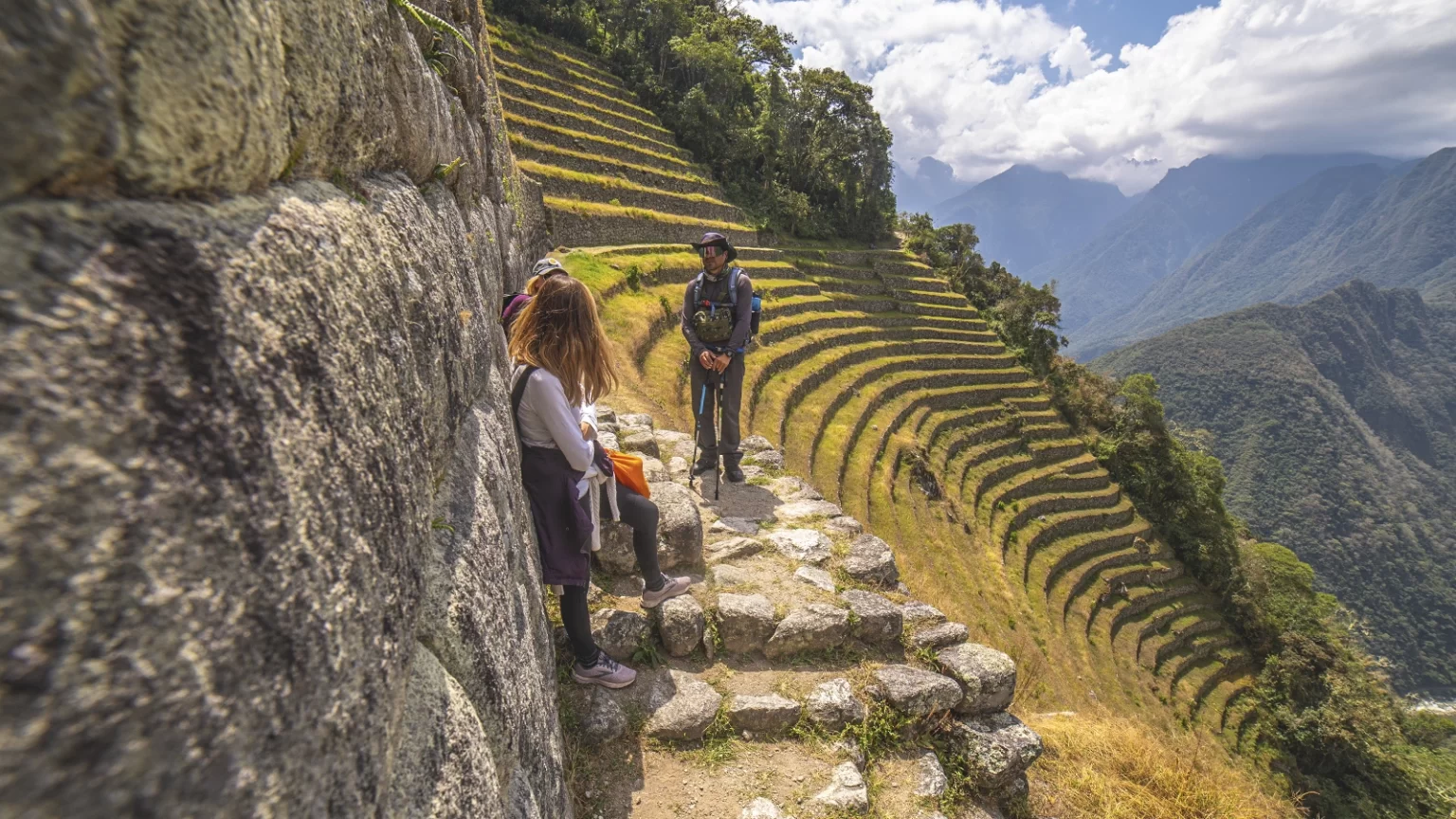
| Day 3 | Cloud forest walking past the Wiñay Wayna ruins |
| Day 4 | Early Sun Gate arrival for the first view of Machu Picchu |
We go through each day in detail, along with acclimatization tips and what actually happens if you're not ready for the altitude, in our full Inca Trail difficulty guide. If safety is your main concern rather than difficulty, we cover that separately in our Inca Trail safety guide.
Salkantay and other alternative treks
Not everyone wants to hike the Classic Inca Trail, and honestly, not everyone needs to. The Salkantay Trek crosses the mighty Salkantay Pass at 4,630 m, taking you from glaciers through cloud forest before reaching Machu Picchu on the final day. It's a genuinely different route with fewer crowds than the Inca Trail corridor, and it doesn't require the same limited permit system — a real advantage if you're planning later than the three-to-six-month booking window the Inca Trail usually needs. Our Salkantay Trek page covers the full itinerary.
Ask our local Cusco team.
Huayna Picchu vs Machu Picchu Mountain: Which Climb to Book
If you're planning Machu Picchu for 2026, this one decision changes the experience more than almost any other. Huayna Picchu gives you the iconic cliffside photos everyone recognizes, along with a steeper, narrower, more exposed climb. Machu Picchu Mountain offers broader panoramic views and a longer but steadier hike. Permit strategy matters here — Huayna Picchu is capped at 200 permits a day and can sell out months ahead of your trip, while Machu Picchu Mountain has a higher daily cap and stays available much later into the season.
We compare both climbs side by side, including which one suits nervous hikers versus thrill-seekers, in our Machu Picchu Mountain vs Huayna Picchu guide.
Altitude & Acclimatization at Machu Picchu
Here's the detail that surprises a lot of first-time visitors: Machu Picchu itself is not the high-altitude part of the trip. At roughly 2,430 m, the citadel sits nearly 1,000 m lower than Cusco's 3,400 m, and well below the altitude where soroche (altitude sickness) typically becomes a serious concern. If your itinerary is Cusco-then-Machu-Picchu, you're actually descending in elevation by the time you reach the ruins.
The real altitude exposure comes from everything around Machu Picchu — Cusco itself, the Sacred Valley, and especially trek passes like Dead Woman's Pass on the Inca Trail (4,215 m) or the Salkantay Pass (4,630 m), both of which sit well above the citadel and above Cusco. That's why acclimatization planning should be built around your highest point, not your final destination.
We go into full detail on symptoms, prevention, medication, and what to do if altitude sickness hits mid-trek in our dedicated Cusco altitude sickness guide — worth reading in full regardless of which route you choose, since it covers Cusco, the Sacred Valley, and every trek pass in this guide.
Best Time to Visit Machu Picchu
The best time to visit comes down to weather and crowds, and the two seasons offer genuinely different experiences. The dry season, from roughly May through September, gives clear views and safer trail conditions underfoot, but it's also peak crowds and peak pricing. The rainy season, October through April, brings greener landscapes and noticeably fewer crowds, though occasional rain can affect trail conditions and visibility. Shoulder months — April and October in particular — often give the best balance of the two.
We cover month-by-month conditions, including which months are worth avoiding entirely, in our best time to visit Cusco and Machu Picchu guide.
Where to Stay: Aguas Calientes vs Cusco vs Sacred Valley
Where you sleep affects your Machu Picchu trip almost as much as which circuit you book, and the right answer depends on what you're optimizing for — sunrise access, acclimatization, or pace. We don't have hotel partnerships to plug here, so this is a straight decision framework rather than a list of picks.
Aguas Calientes
The town directly beneath the ruins, and the only base that lets you reach the citadel gate before the first buses arrive from the valley floor. The trade-off is price — accommodation here tends to run higher than comparable options in Cusco — and a fairly compressed, tourist-oriented town center. Worth it if catching first light at the citadel, with thinner crowds for that first hour, is a priority for you.
Cusco
The best logistics hub for a Peru trip generally, with the widest range of accommodation at every price point, the most flight and bus connections, and the nightlife and restaurant scene Aguas Calientes doesn't have. It's also where most itineraries build in acclimatization days anyway, so basing here for a night or two before heading to Machu Picchu does double duty.
Sacred Valley
Towns like Ollantaytambo and Urubamba sit at a noticeably lower altitude than Cusco, which makes the Sacred Valley a smart base if you're feeling the elevation or want a gentler acclimatization curve. It's a quieter, more rural alternative to Cusco with easy onward transport to Machu Picchu via train from Ollantaytambo specifically.
For a broader look at options across all three of these bases, plus Lima, see our best hotels in Peru guide.
Day Hikes & Add-On Adventures Near Cusco
Most travelers combine their Machu Picchu trip with at least one extra day hike around Cusco, and for good reason — these trips fit easily around the acclimatization days you'll already need at altitude.
- Humantay Lake — a turquoise glacial lake reachable on a single-day tour, popular as a Salkantay warm-up. See the Humantay Lake Tour for details.
- Rainbow Mountain (Vinicunca) — the famous multi-colored ridges make for a dramatic one-day adventure. Check the Rainbow Mountain Tour for logistics.
- Palccoyo — a less crowded alternative to Rainbow Mountain, with several colorful ridges instead of one. Details on the Palccoyo Rainbow Mountain Tour page.
- Ausangate — a longer, higher-altitude option for travelers wanting glacial lagoons and far fewer crowds. See the Ausangate 7 Lagoons Hike for the full itinerary.
Fitting Machu Picchu Into Your Peru Trip
Machu Picchu rarely stands alone on a Peru itinerary — most travelers build it into a wider loop through Cusco, the Sacred Valley, and sometimes further afield. If you're mapping out the rest of the trip around it, our 8-day Peru itinerary and 7-day Wonders of Peru itinerary both use Machu Picchu as the anchor and can be adapted around whichever route from this guide you choose.
Practical Checklist Before You Go
Book your circuit and any add-on climb first
Everything else — trains, treks, hotels — is easier to plan once you know your entry date, circuit, and whether you're doing Huayna Picchu or Machu Picchu Mountain.
Bring soles, not just cards
Small vendors, local transport, and community access points around Cusco and the trails generally run on cash. Our Peru currency guide covers exchange tips and how much to carry.
Carry your passport, not a photocopy
The passport number on your ticket must match the document you present at the gate — no substitutions are accepted.
Layer for a big temperature swing
Cold mornings, strong midday sun, and sudden weather changes are normal at this altitude regardless of season.
Build in acclimatization days before any trek
Two to three days in Cusco or the Sacred Valley first, covered in full in our altitude sickness guide.
Conclusion
Planning a trip to Machu Picchu in 2026 comes down to a handful of key decisions: which circuit to enter through, whether to climb Huayna Picchu or Machu Picchu Mountain, which season fits your priorities, how you want to reach the citadel in the first place, and where to base yourself while you do it. Get those choices right and everything else, from permits to hotels, tends to fall into place.
Whether you hike the Classic Inca Trail, cross the Salkantay Pass, or arrive by train for a single unforgettable day, Machu Picchu remains one of the few places on earth that lives up to the hype once you're actually standing in front of it. We're happy to help you work out the details — feel free to get in touch with our team or start exploring options on our homepage.