Pachamama is usually translated as "Mother Earth," but that undersells the concept considerably — "Pacha" in Quechua and Aymara refers to space and time fused together as a single living whole, not just soil and rock. She predates the Inca Empire, survived Spanish colonization by merging with the Virgin Mary in Catholic-Andean practice, and has, in the past two decades, become a genuine legal person under real national constitutions — a journey from ancient deity to constitutional entity that few belief systems anywhere can claim. Here's the real history, the ritual practices still performed today, and how the concept made it all the way to Netflix.
More Than "Mother Earth": What Pacha Actually Means
"Mama" is straightforward — "mother" in both Quechua and Aymara. "Pacha" is where the common English translation loses real meaning. In Andean cosmovision, pacha describes an integrated concept of world, space, and time together — not simply the physical ground beneath your feet, but the entire lived, experienced cosmos, past and present at once. This is why Andean cosmology divides existence into three pachas rather than describing a single physical world: Hanan Pacha (the upper, celestial realm), Kay Pacha (this world, where humans live), and Ukhu Pacha (the inner or under-world, associated with ancestors and fertility).
Older Than the Empire That Made Her Famous
Like Quechua itself, reverence for Pachamama predates the Inca Empire by a considerable margin, rooted in earlier Andean agricultural societies for whom a direct, reciprocal relationship with the earth was a practical necessity, not an abstract belief — successful harvests in the demanding, high-altitude Andean environment genuinely depended on treating the land as a living, responsive partner rather than an inert resource. The Inca state incorporated Pachamama worship into its broader state religion alongside the sun god Inti and other deities, but never displaced or subordinated her — she remained a distinct, actively worshipped figure throughout the empire's history, worshipped through direct offering rather than temple ritual in the way Inti was.
The Despacho Ceremony: Real Structure, Not Vague Symbolism
The most significant ritual practice associated with Pachamama today is the despacho, an offering bundle prepared by a paqo — a trained Andean ritual specialist, sometimes translated loosely as a shaman, though the role is specific to Andean spiritual practice rather than a generic term. A despacho typically includes coca leaves (selected and arranged with deliberate symbolic intent), llama fat or a dried llama fetus (sullu), sweets, seeds, flowers, and incense, layered onto paper or cloth in a specific pattern before being either burned or buried as a direct offering to both Pachamama and the Apus, the mountain spirits believed to inhabit specific peaks across the Andes.
A simpler, far more common daily practice is the ch'alla — pouring a small amount of a drink (traditionally chicha, corn beer, though any alcohol is now commonly used) onto the ground before drinking, as a direct, everyday acknowledgment of Pachamama before consuming anything oneself. This is a genuinely living custom, not archaic folklore — you'll see it practiced casually, without ceremony, across the Andes today.
The Q'ero people, living in a remote high-altitude region of the Cusco department, are widely regarded by anthropologists as having preserved pre-Hispanic Andean spiritual practice with unusual continuity, owing largely to their historical geographic isolation, and are frequently sought out specifically for their paqos' ritual knowledge.
Surviving Colonization: Pachamama and the Virgin Mary
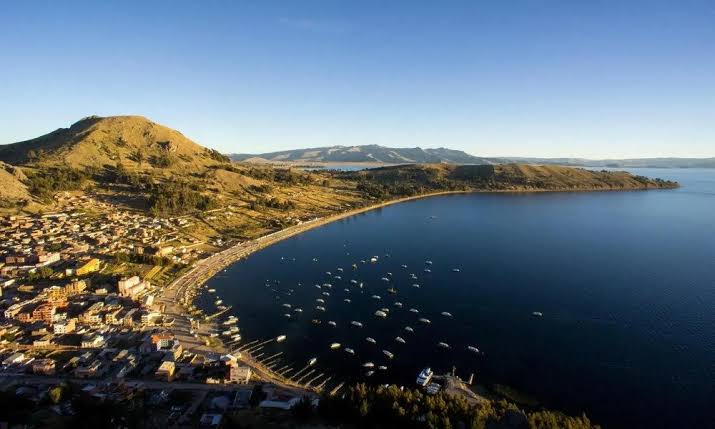
Spanish colonial authorities actively suppressed open worship of Andean deities, but Pachamama veneration survived largely through religious syncretism rather than open resistance — many Andean Catholic communities came to associate Pachamama with the Virgin Mary, particularly with region-specific Marian devotions such as the Virgin of Copacabana (venerated on the shores of Lake Titicaca) and the Virgin of Candelaria. This wasn't simple substitution; it produced a genuinely blended devotional practice that persists in many Andean Catholic communities today, where Marian feast days and Pachamama offerings can occur alongside one another without contradiction in local religious life.
From Ancient Deity to Constitutional Right
This is the genuinely remarkable modern turn in Pachamama's story: real, documented national legal recognition, not metaphor.
In 2008, Ecuador became the first country in world history to grant Nature — explicitly named Pacha Mama in the constitutional text itself — enforceable legal rights, following a national referendum approved by roughly 64 percent of voters. Article 71 of Ecuador's constitution states that Nature has the right to integral respect for its existence and for the maintenance and regeneration of its life cycles.
Bolivia followed in December 2010 with Law 071, the Law of the Rights of Mother Earth, enumerating eleven specific legal rights for the environment, expanded further by a 2012 framework law integrating these rights into national development policy. The Bolivian legislation followed directly from the World People's Conference on Climate Change and the Rights of Mother Earth, held in Cochabamba in April 2010, which drew roughly 30,000 participants from more than 100 countries and produced the Universal Declaration of the Rights of Mother Earth. Bolivian President Evo Morales had raised the concept at the United Nations General Assembly the previous year, on 22 April 2009 — the same date the UN would later formally designate International Mother Earth Day.
Pachamama on Screen: A Real Film, Correctly Credited
Pachamama (2018) is an animated feature film directed by Argentine filmmaker Juan Antín, produced through the Paris-based studio Folivari as a France-Luxembourg-Canada co-production, and distributed internationally by Netflix. The film follows Tepulpaï, a young boy in an Andean village during the era of Inca rule and the early Spanish conquest, who sets out to recover his community's sacred golden idol — with Pachamama appearing in the story as a guiding condor spirit. Antín spent 14 years developing the project, drawing on extensive research into pre-Columbian Andean art and iconography, and the film was nominated for a César Award, France's highest national film honor.
Experiencing Pachamama Respectfully, As a Visitor
Spiritually curious travelers will find a genuine, respectful despacho ceremony one of the more meaningful cultural experiences available on an Andean trip — ask your operator whether one can be arranged with a real paqo rather than a staged performance. Families with children can introduce the concept through the accessible framing of the 2018 Pachamama film before or after a trip. Travelers interested in law and politics may find Ecuador and Bolivia's constitutional recognition of Pachamama a genuinely unusual case study worth researching further. Anyone offered coca tea, chicha, or a ch'alla libation by a local host should feel comfortable participating respectfully — it's an everyday, welcoming gesture, not an exclusive ritual.
Where You Might Encounter Pachamama Worship
Several of Kontiki's most popular full-day treks pass through high-altitude sites where local communities still make active offerings to Pachamama and the Apus — ask your guide, many of whom can explain the practice firsthand. Scroll to see our most-booked full-day departures.

Myth vs. Fact
- ✓ Pachamama simply means "Mother Earth," full stop.
- ✓ Pachamama worship is purely historical folklore today.
- ✓ Legal recognition of Pachamama is symbolic language, not real law.
- ✓ "Pacha" fuses space and time into one concept — closer to "world" than "earth" alone.
- ✓ Ch'alla offerings and despacho ceremonies are actively performed across the Andes today.
- ✓ Ecuador's constitution and Bolivia's Law 071 are real, enforceable national legislation.
Glossary
Despacho: A structured Andean offering bundle prepared by a paqo.
Paqo: A trained Andean ritual specialist.
Ch'alla: The everyday practice of pouring a small offering of a drink to the earth before consuming it.
Apu: A mountain spirit or deity in Andean cosmology.
Common Mistakes
Treating "Pacha" as a simple synonym for "earth." It's a considerably broader space-time concept. Confusing the two meanings of "Hanan." Cosmological realm and royal dynasty faction are two entirely different uses of the same word — see our dedicated callout above. Assuming legal recognition is symbolic only. Ecuador and Bolivia's laws are real, enforceable legislation, not metaphorical language. Treating despacho ceremonies as generic "shamanic" tourism. Seek an operator connecting you with a genuine paqo rather than a staged performance.
International Recognition
Beyond Ecuador and Bolivia's constitutional and legislative recognition, the concept directly influenced the United Nations' establishment of International Mother Earth Day, observed annually on April 22nd since 2009, following advocacy by the Bolivian government explicitly invoking the Pachamama concept at the UN General Assembly.
Frequently Asked Questions — Pachamama
Pachamama's real story runs from pre-Inca agricultural necessity to 21st-century constitutional law — a genuinely rare trajectory for any deity. Understanding the actual depth behind the word turns a souvenir T-shirt phrase into something worth actually noticing on the ground: the quiet ch'alla poured before a shared drink, the despacho smoke rising on a mountain pass, the everyday, living relationship the concept still describes.
Ask us to arrange one.