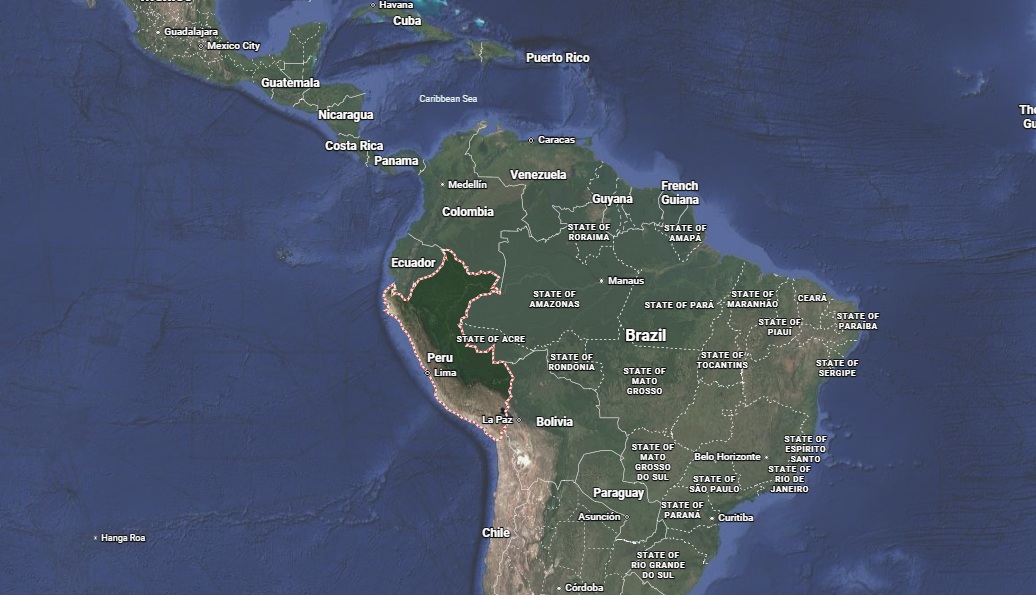
Short answer: the Inca Empire rose with astonishing speed, expanding from a small highland kingdom around Cusco into a 4,000-kilometer empire stretching across six modern countries in less than a century — engineering roads, terraces, and cities that still stand today — then fell just as quickly to a small force of Spanish conquistadors. This guide covers how Tahuantinsuyu rose, how it was governed and engineered, what actually happened when Pizarro arrived, and what survived the empire's collapse.
The Rise of the Inca Empire
Before Tahuantinsuyu became an empire, the Inca were one of many small kingdoms competing for territory in the Cusco valley, likely no more significant militarily or culturally than several of their neighbors. Their rapid transformation began under Pachacuti, the ninth Sapa Inca (emperor), who took power around 1438 after — according to Inca oral history — successfully defending Cusco against a rival group called the Chanka, an unexpected victory that reportedly convinced Pachacuti of his own divine mandate to expand. His subsequent military campaigns and diplomatic alliances expanded Inca control far beyond Cusco within a single generation.
Pachacuti's successors, particularly Túpac Inca Yupanqui and Huayna Cápac, continued this expansion, and by the early 1500s, Tahuantinsuyu stretched from present-day southern Colombia to central Chile — an extraordinary rate of growth for a pre-industrial empire, achieved without the wheel, without draft animals larger than the llama, and without a market economy in the conventional sense. Much of this expansion combined outright conquest with strategic incorporation — local rulers who submitted peacefully were often left in place as administrators, while their heirs were brought to Cusco to be educated in Inca customs, a soft-power tactic that helped stabilize newly absorbed territories.

How the Empire Was Organized
Tahuantinsuyu was divided into four suyu (regions) radiating from Cusco, each governed by an appointed administrator answering to the Sapa Inca, who was considered a living descendant of the sun god Inti and held near-absolute religious and political authority. The empire ran on a labor-tax system called the mit'a, where communities contributed work — building roads, farming state and religious land, military service, mining — rather than paying in goods or currency, since the Inca had no money in the conventional sense. In exchange, the state provided food storage networks (qullqa) that functioned as a form of social insurance during droughts or poor harvests, redistributing surplus from productive regions to those in need.
Despite lacking a written script, the empire tracked this vast system of labor, tribute, and resources through the quipu, a network of knotted cords managed by trained specialists — we cover exactly how these worked in our dedicated quipu guide. Local languages and customs were generally tolerated across the empire, though Quechua was promoted as an administrative lingua franca, which is part of why it remains widely spoken across the Andes today.
- Sapa Inca
- — the emperor, considered a divine ruler descended from the sun god Inti.
- Suyu
- — one of the empire's four administrative regions.
- Mit'a
- — a mandatory labor-tax system used instead of currency.
- Ayllu
- — the basic kinship-based community unit of Andean society.
- Qullqa
- — state storehouses used to redistribute food and goods across the empire.
- Quipu
- — knotted cords used to record numbers and possibly narrative information.
Roads, Terraces & Engineering
The Inca built an estimated 30,000-40,000 kilometers of road connecting the empire's four regions, engineered to cross some of the most difficult terrain on Earth — high mountain passes, deep river valleys, and dense cloud forest — using suspension bridges woven from plant fiber, stone staircases, and way stations (tambos) spaced roughly a day's walk apart to support travelers, messengers, and troops. A relay system of trained runners called chasquis could carry messages and small goods across enormous distances remarkably quickly, reportedly covering hundreds of kilometers within a few days by passing information between stations.
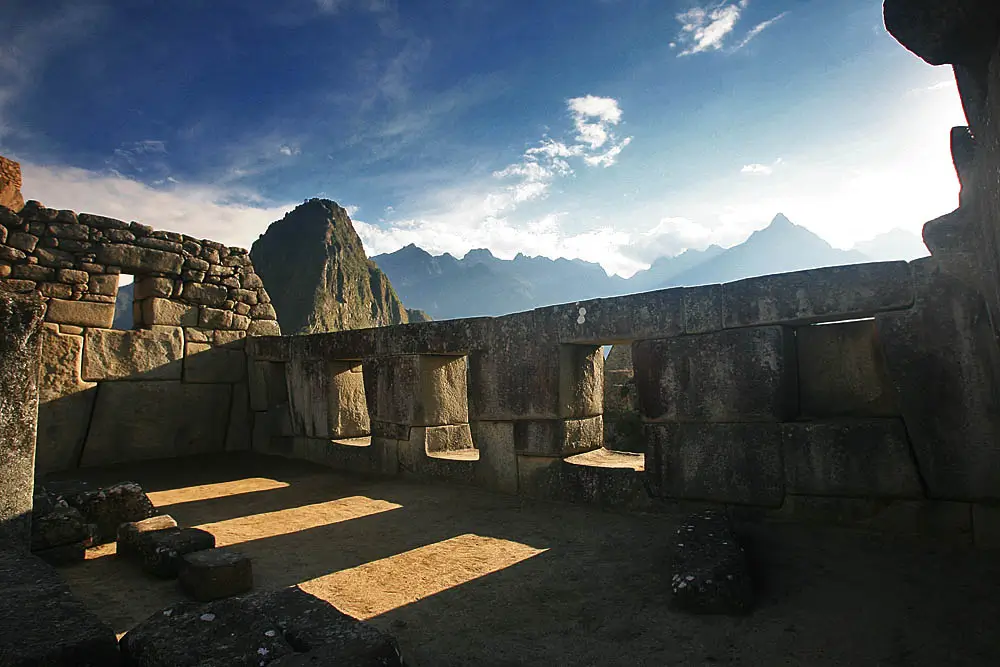
Equally impressive was Inca agricultural engineering. Terracing systems, still visible throughout the Sacred Valley today, allowed farming on steep mountainsides that would otherwise be unusable, while also managing water drainage and creating localized microclimates that let farmers cultivate crops at elevations where they'd normally fail. The site of Moray, near Cusco, is thought to have functioned partly as an agricultural research station, with its concentric circular terraces creating measurable temperature differences between top and bottom that may have been used to test crop viability at different simulated elevations.
The Spanish Conquest
Francisco Pizarro landed in 1532 with a force of under 200 men, arriving during a devastating civil war between rival claimants Atahualpa and Huáscar following the death of emperor Huayna Capac — a conflict, possibly worsened by a smallpox epidemic that had already spread ahead of the Spanish through indigenous trade networks, that left the empire weakened and divided right as the Spanish arrived. Pizarro captured Atahualpa at Cajamarca in a surprise ambush during what the emperor believed was a diplomatic meeting, extracted a massive ransom in gold and silver — famously enough to fill a room — and executed him regardless in 1533, effectively breaking centralized Inca authority.
Cusco fell to Spanish control shortly after, though pockets of resistance, based in the remote city of Vilcabamba deep in the cloud forest, held out for nearly four decades under a succession of rebel Inca rulers before the last, Túpac Amaru, was captured and executed in 1572 — a date historians often mark as the true end of independent Inca rule.
| Myth | Fact |
|---|---|
| The Inca Empire lasted for centuries | Its rapid imperial expansion spanned less than 100 years before Spanish conquest. |
| The Inca had no system of record-keeping | The quipu recorded numerical data extensively, and some historians argue it may have encoded narrative information too. |
| Machu Picchu was the Inca capital | Cusco was the empire's political capital; Machu Picchu was a royal estate, not a seat of government. |
| The Inca used iron tools and the wheel for construction | They built with stone and bronze tools, without iron or wheeled transport, relying instead on organized labor and remarkable planning. |
Walk the Inca Trail with our local team.
Conclusion
The Inca Empire's story is one of remarkable speed in both directions — an empire built in decades, engineered with roads, terraces, and record systems still studied today, and undone almost as quickly by a small Spanish force and a civil war it never saw coming. Understanding that arc makes every stone wall in Cusco, every terrace in the Sacred Valley, and every step of the Inca Trail mean a little more.
Curious about the record system that helped hold it all together? See our quipu guide, or head back to Peru essentials for the wider picture.