The plants found in the rainforest of the Peruvian Amazon include some of the tallest trees on Earth, a water lily strong enough to hold a child's weight, a palm that can physically relocate itself over years, and the source plant behind one of history's most important medicines. Here are 18 real species from the Amazon jungle — organized by giant trees, palms, medicinal plants, flowers, and unusual survival adaptations — with the health claims sorted from the actual science.
Giant Trees of the Amazon
The Amazon's tallest trees solve the same engineering problem in different ways: how to stay upright in shallow, often waterlogged soil while competing for canopy light.
Kapok (Ceiba pentandra)
One of the tallest trees in the Amazon, the kapok is instantly recognizable by its massive buttress roots — flared, wall-like structures that spread along the surface rather than digging deep, a genuine structural adaptation to the rainforest's thin topsoil. The tree also produces a light, water-resistant fiber historically used for stuffing life jackets before synthetic materials replaced it.
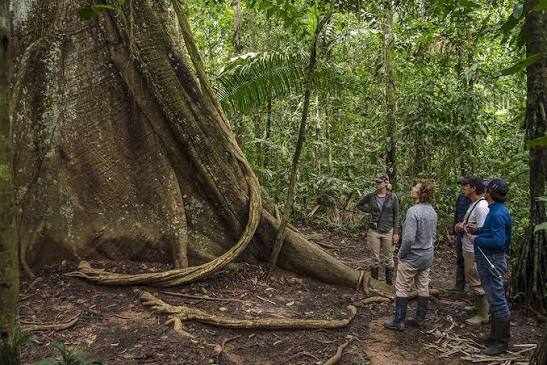
Brazil Nut Tree (Bertholletia excelsa) — Castaña
The Brazil nut tree can live for centuries and depends on a single genus of large-bodied bee for pollination — a real ecological fragility, since the tree's pollination and the specific bee's presence are tightly linked. Its hard, coconut-sized pods take up to 14 months to mature and contain the nuts inside a tough woody shell that requires an animal (traditionally the agouti rodent) or a person to open.

Rubber Tree (Hevea brasiliensis) — Caucho
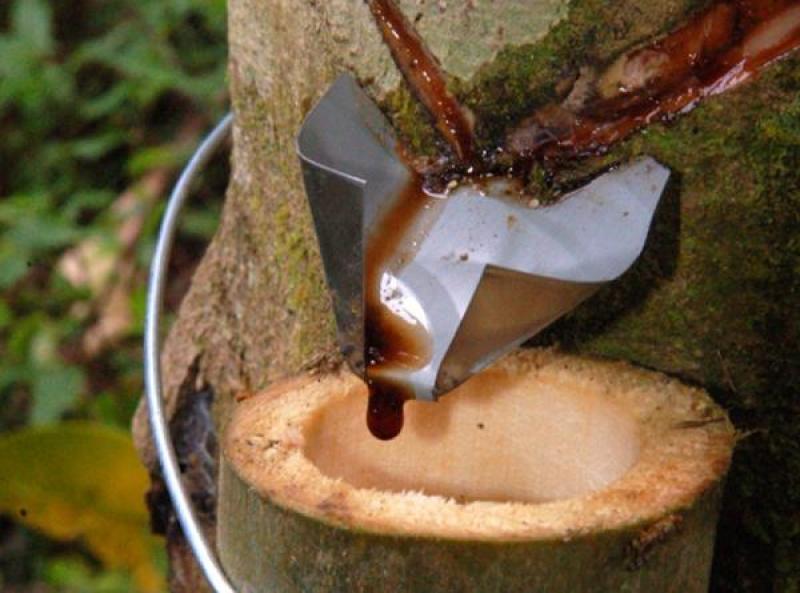
The source of natural latex rubber, the caucho tree produces a milky sap that coagulates into rubber when tapped — a discovery that drove a genuine economic boom (and, historically, serious human rights abuses under forced labor systems) across the Amazon basin in the late 19th and early 20th centuries, before rubber plantations shifted primarily to Southeast Asia.

Strangler Fig (Ficus species)
A strangler fig begins life as a seed deposited by a bird high in a host tree's canopy, then sends roots down to the ground while gradually enveloping the host in a lattice of woody roots — often eventually outliving the host tree entirely, leaving a hollow fig "cage" where the original trunk once stood. (No photo available yet.)
Balsa (Ochroma pyramidale)
Despite its light weight, balsa is technically a hardwood — its extremely low density comes from large, thin-walled cells rather than the tree being biologically softwood. It grows remarkably fast, often reaching harvestable size within 6-10 years, and its strength-to-weight ratio makes it valuable for aircraft construction history and modern wind turbine blade cores alike. (No photo available yet.)
Amazon Palms
Palms fill a huge range of ecological niches across the Amazon, from towering canopy trees to genuinely mobile understory species.
Açaí Palm (Euterpe oleracea)
Best known internationally for its dark purple berries, blended into the açaí bowls now common well beyond South America, the açaí palm also produces palm heart, a traditional food ingredient harvested from the growing tip of the plant — though harvesting palm heart kills that particular stem, unlike berry harvesting.
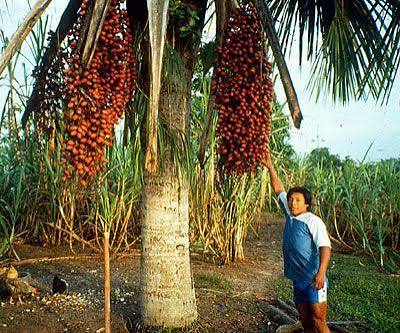
Aguaje / Buriti Palm (Mauritia flexuosa)
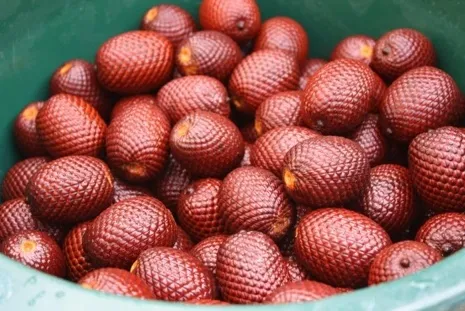
This wetland palm produces the aguaje fruit — a dietary staple across much of the Peruvian Amazon, covered in more depth in our Peruvian fruits guide. As a plant, it's notable for forming dense stands called "aguajales" in seasonally flooded wetland areas, functioning as a genuinely important habitat and food source for Amazon wildlife, not just people.
Walking Palm (Socratea exorrhiza)
Perhaps the most genuinely strange plant on this list, the walking palm grows on above-ground stilt roots and can gradually shift its position over a period of years by growing new roots toward better light and letting older roots on the shaded side die back — a real, documented phenomenon, though far slower than "walking" implies; this is not something you'd ever witness happening in real time. (No photo available yet.)
Medicinal & Culturally Significant Plants
The Amazon's pharmacological importance is real and historically significant — but that significance gets exaggerated online more often than any other category on this list, so we're being especially careful with sourcing here.
Ayahuasca (Banisteriopsis caapi + Psychotria viridis)
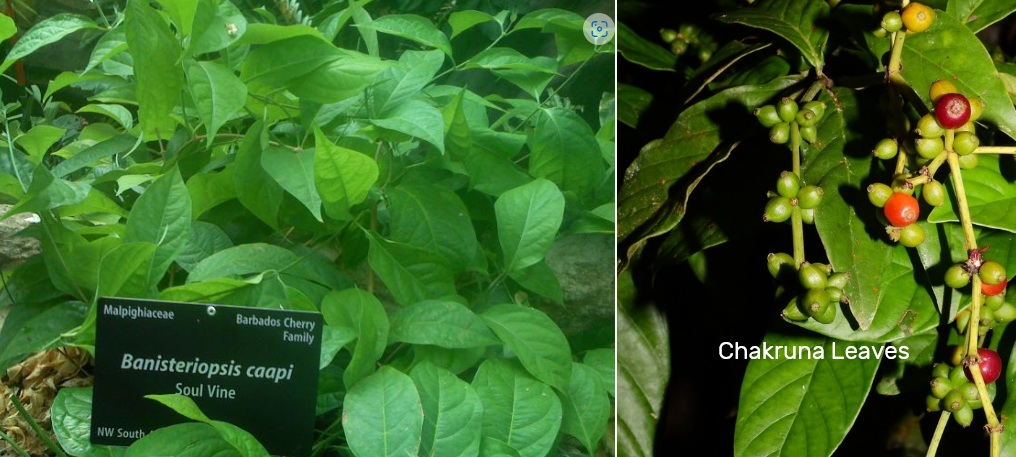
Traditional ayahuasca brew requires combining two plants: the Banisteriopsis caapi vine, which contains compounds that allow the second plant's active ingredient to be orally active, and the leaves of a DMT-containing plant, most commonly Psychotria viridis (chacruna). Used in indigenous Amazonian spiritual and healing traditions for generations, it has also become a significant wellness-tourism draw in recent decades. If you're considering a ceremony, our ayahuasca safety guide covers what to actually check before booking.
Una de Gato / Cat's Claw (Uncaria tomentosa)
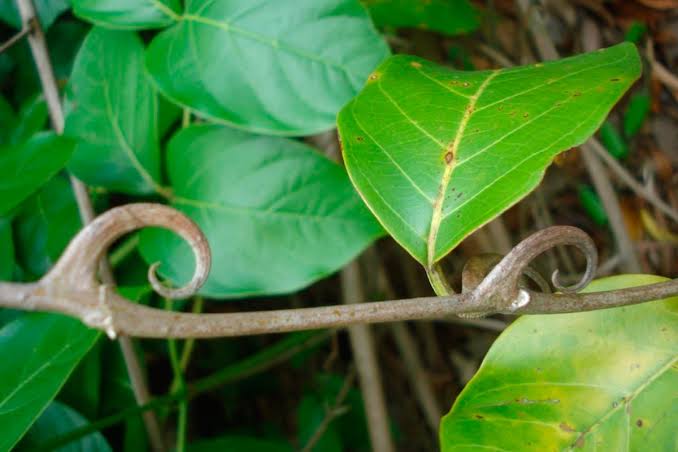
A thorny liana native to the Peruvian Amazon, named for the small claw-shaped thorns along its stem.
Sangre de Grado / Dragon's Blood (Croton lechleri)
When cut, this tree exudes a deep red sap traditionally applied directly to cuts and wounds. Unlike some traditional remedies on this list, sangre de grado has meaningful scientific backing — it contains taspine and other compounds with documented wound-healing and anti-inflammatory activity in published research, making it one of the more evidence-supported entries here.
Cinchona / Quina (Cinchona officinalis)
Native to the Andean-Amazon transition zone, cinchona bark contains quinine, the first effective treatment ever developed for malaria. For roughly 300 years, until synthetic anti-malarial drugs were developed in the 20th century, cinchona bark extract was the primary global treatment for the disease — arguably making it one of the most historically consequential plants on this entire list, genuinely comparable in impact to any pharmaceutical discovery since. (No photo available yet.)
Flowers & Epiphytes
These species solve the Amazon's light-competition problem by growing on or above other plants, or by producing genuinely oversized structures to maximize photosynthesis and pollinator attraction.
Victoria Amazónica
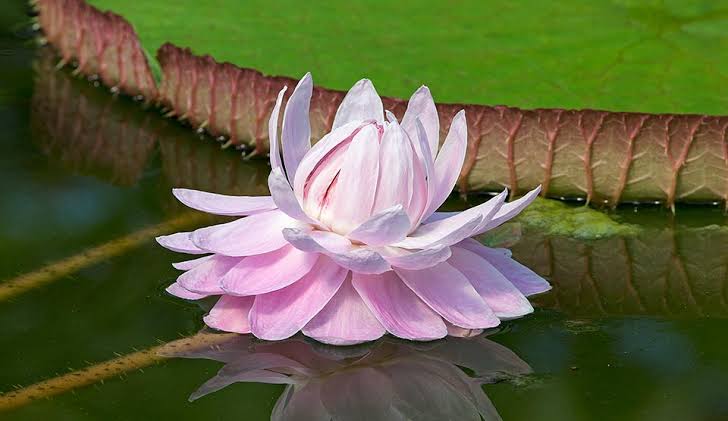
The Amazon's giant water lily produces circular leaves that can exceed 3 meters (10 feet) in diameter, with a rigid rib structure strong enough to support the weight of a small child — a real, widely documented and photographed phenomenon, not an exaggeration. Its enormous flowers open white on the first night, then close and reopen pink the following night, changing temperature and scent to manipulate its beetle pollinators' behavior across the two-night cycle.
Heliconia
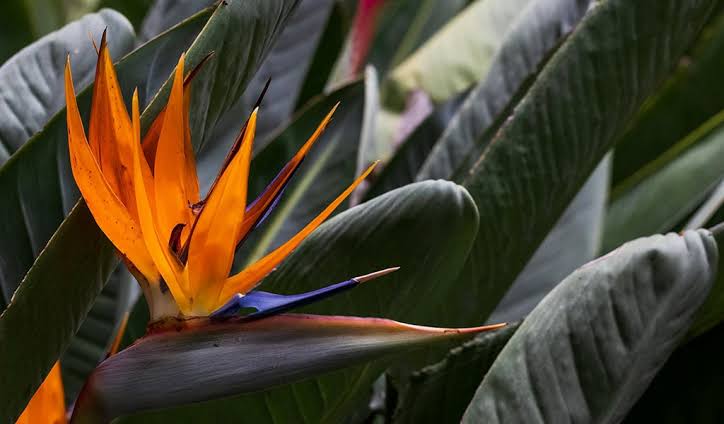
Heliconia's bright, waxy bracts (often mistaken for the flower itself — the true flowers are small and hidden inside) evolved specifically to attract hummingbirds, several species of which have co-evolved bill shapes matching particular heliconia varieties almost exactly.
Bromeliads
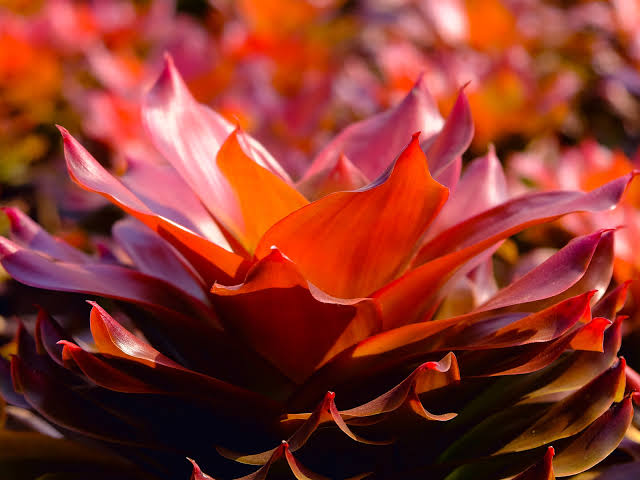
Many Amazon bromeliads are epiphytes, growing on tree branches rather than in soil, with tightly overlapping leaves forming a small reservoir ("phytotelmata") that collects rainwater — these miniature pools function as genuine micro-habitats, hosting everything from insect larvae to entire generations of certain tree frog species that never touch the forest floor.
Orchids
The Amazon and surrounding Andean foothills host an extraordinary concentration of orchid diversity — many species are so specifically adapted to a single pollinator species that they've evolved flower shapes mimicking that insect's mate, tricking male insects into attempting to mate with the flower and inadvertently pollinating it in the process. (No photo available yet.)
Unusual Survival Adaptations
Horned Acacia (Acacia cornigera and related species)
This tree has evolved a genuine mutualistic partnership with a specific ant species: it grows hollow thorns the ants live inside and produces sugary nectar to feed them, while the ants aggressively defend the tree from herbivores and even prune competing vegetation that touches its branches — a textbook, well-documented example of mutualism in ecology. (No photo available yet.)
Passionflower (Passiflora species)
Beyond producing the granadilla, maracuyá, and tumbo fruits covered in our Peruvian fruits guide, Passiflora vines have an intricate flower structure — a ring of thread-like filaments surrounding a raised central structure — specifically evolved to accommodate particular pollinators, including some species pollinated almost exclusively by specific bee or hummingbird species matched to that flower's exact dimensions. (No photo available yet.)
For Every Kind of Traveler
Families with kids tend to respond best to the most visually dramatic species — the giant Victoria amazónica lily pads and the walking palm's strange root system are the easiest to make memorable for younger travelers. Wellness-focused and spiritual travelers should read our full ayahuasca safety guide before booking any ceremony, rather than relying on marketing claims alone. Photography enthusiasts will find heliconia, orchids, and the Victoria amazónica the most rewarding subjects, given their striking color and scale. Fitness-focused travelers combining a jungle lodge stay with an Andean trek should note that Amazon lodge visits themselves are typically low-exertion compared to a mountain trek — a genuine rest day opportunity within an active itinerary.
Myth vs. Fact
- ✓ Una de gato is a proven cancer cure.
- ✓ The "walking palm" visibly walks.
- ✓ Ayahuasca is a single plant.
- ✓ Real preclinical evidence exists for anti-inflammatory/immune effects, but no human clinical trials support a cancer-cure claim.
- ✓ It shifts position gradually over years via new root growth — never something you'd witness happening in real time.
- ✓ Ayahuasca requires combining two separate plants — the vine and the DMT-containing leaf — neither works alone.
Glossary
Epiphyte: A plant that grows on another plant (typically a tree branch) rather than in soil.
Phytotelmata: A small water reservoir formed by a plant's own leaf structure, functioning as a micro-habitat.
Liana: A woody vine that roots in the ground and climbs other plants toward the canopy.
Mutualism: A relationship between two species that benefits both, such as the horned acacia and its resident ants.
Common Mistakes
Believing "miracle cure" marketing at face value. Una de gato is the clearest example on this list, but apply the same scrutiny to any Amazon plant marketed with dramatic health claims. Assuming plant medicine ceremonies are all equally safe. Check our ayahuasca safety guide before booking any ceremony. Touching or picking plants without guidance. Some Amazon plants cause skin irritation, and many ecologically important species are best left undisturbed. Expecting to spot everything on a short visit. A knowledgeable guide dramatically increases what you'll actually notice versus walking a trail alone.
International Recognition
Quinine's discovery from cinchona bark is widely regarded by historians of medicine as one of the most consequential pharmacological discoveries from the Americas, credited with making European colonial and later global travel through malarial regions significantly safer for roughly three centuries before synthetic alternatives existed. Açaí has become a genuine global commercial crop well beyond its original Amazon range, and ayahuasca ceremonies now draw international wellness tourism to the Peruvian Amazon specifically because of this cultural and botanical heritage.
Frequently Asked Questions — Amazon Rainforest Plants
The Amazon's plant life is genuinely remarkable without needing any exaggeration — a tree that can shift position over years, a water lily that can hold a child, and the historical source of the world's first real malaria treatment are all documented fact, not marketing. The one place to stay skeptical is health claims sold online; the rest of this list earns its "fascinating" label honestly.
We'll help plan an Amazon add-on.