Short answer: who built Machu Picchu comes down to one emperor's vision and thousands of skilled hands executing it — Pachacuti commissioned the site, and Inca stonemasons, engineers, and laborers built it using techniques so precise that many structures have survived over 500 years of Andean earthquakes without significant damage. This guide covers who was actually responsible, how construction worked without modern tools, and why the engineering still impresses specialists today.
Who Commissioned Machu Picchu
Historical and archaeological evidence points clearly to Pachacuti, the ninth Sapa Inca, as the emperor who commissioned Machu Picchu around 1450, likely as a royal estate for himself and his royal lineage. Pachacuti was the same ruler responsible for the Inca Empire's rapid territorial expansion beginning in 1438, and Machu Picchu fits a broader pattern of similar royal estates he and his successors built throughout the empire — impressive but not unique in purpose, even if it's by far the best-preserved example that survives today.
Who Actually Built It, and How
The physical construction was carried out by skilled Inca stonemasons alongside a large organized workforce, most likely mobilized through the mit'a system — a labor-tax obligation owed by all subjects of the empire, rotating workers through state projects rather than relying on slavery in the traditional sense. It was still mandatory, unpaid labor, but it operated as a civic duty within Inca society rather than as a punitive or coercive institution imposed on a conquered underclass.
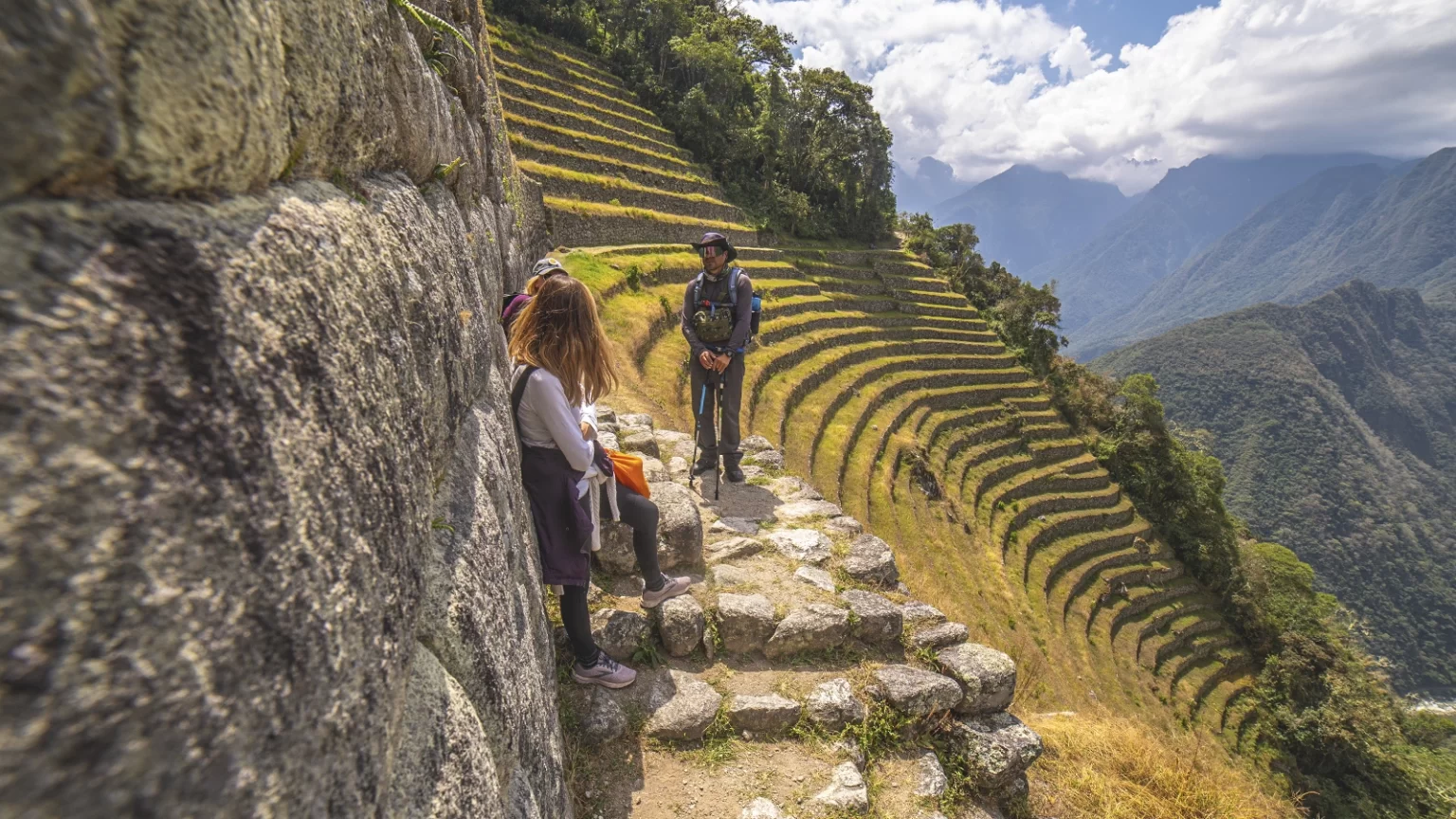
Construction relied on remarkably simple tools by modern standards — stone hammers and bronze implements, since the Inca had no iron metallurgy and never adopted the wheel for construction or transport. Blocks were shaped, tested against neighboring stones, reshaped, and refitted repeatedly until they interlocked with almost no gap, a laborious trial-and-error process that nonetheless produced some of the most precise pre-industrial stonework anywhere in the world.
- Mit'a
- — the Inca Empire's rotational labor-tax system, the likely source of Machu Picchu's workforce.
- Dry-stone construction
- — building without mortar, relying on precisely interlocking stones.
- Sapa Inca
- — the Inca emperor; Pachacuti is credited with commissioning Machu Picchu.
Why the Construction Has Survived So Long
Machu Picchu sits in an active earthquake zone, and its survival across more than 500 years is a direct result of its construction technique. The precisely fitted, mortar-free joints between stones allow the structures to shift and resettle slightly during seismic activity rather than cracking under rigid stress — a flexibility that rigid, mortared construction typically lacks. Combined with a sophisticated drainage system built into the terracing to prevent water damage and erosion, the site's engineering reflects a level of planning that modern structural engineers still study today.
| Myth | Fact |
|---|---|
| Slaves built Machu Picchu | The mit'a labor-tax system, a civic obligation owed by all Inca subjects, is the more likely source of the workforce. |
| The Inca used advanced metal tools to cut stone | They relied on stone hammers and bronze tools, without iron, shaping blocks through repeated trial-fitting. |
| Machu Picchu's survival is just luck | Its precision dry-stone construction and drainage engineering were deliberately designed to withstand earthquakes and erosion. |
Let's plan your Machu Picchu visit.
Conclusion
Who built Machu Picchu comes down to a clear historical answer — Pachacuti's vision, executed by skilled Inca stonemasons and a mit'a labor force, using nothing more than stone and bronze tools and centuries of accumulated engineering knowledge. The result has outlasted the empire that built it by nearly 500 years.
Curious what's actually at the site? See our Machu Picchu facts guide, or get in touch with our team.