By Kontiki Hikes·Local Cusco Team·11 min read·Updated August 2026
Machu Picchu is a 15th-century Inca citadel in the Peruvian Andes, generally believed to have served as a royal estate for the emperor Pachacuti, and it remains one of the best-preserved examples of Inca architecture and engineering anywhere in the world.
Short answer: what is Machu Picchu, exactly? Not a lost city, not a mystery temple — a purpose-built royal estate constructed around 1450, combining residential quarters, religious structures, and agricultural terracing on a dramatic mountain ridge. This guide covers what is at Machu Picchu, who built it, and why it earned its place as one of the world's most significant archaeological sites.
Key takeaways
Built as a royal estateMost historians agree it served Emperor Pachacuti and his court, not as a defensive fortress or hidden refuge.
Around 200 structuresTemples, homes, terraces, and ceremonial spaces, all built without mortar.
Never truly "lost"Local families knew its location; it was simply unknown internationally until 1911.
A UNESCO World Heritage Site since 1983Recognized for both its archaeology and its surrounding cloud-forest ecosystem.
Named a New Seven Wonder in 2007A global internet poll cemented its place alongside sites like Petra and the Great Wall.
c. 1450
Approximate construction date
~200
Structures within the citadel
1983
Year inscribed as a UNESCO World Heritage Site
1.5M+
Annual international visitors
What Is Machu Picchu, Really?
Most archaeologists agree that Machu Picchu was built as a royal estate for Pachacuti, the ninth Inca emperor, who ruled from roughly 1438 to 1472 and drove much of the empire's rapid expansion beyond the Cusco valley. It likely served several purposes simultaneously: a retreat where the emperor and his family hosted ceremonies and administered imperial affairs, a religious center aligned with nearby peaks and the sun's movement, and a claim to land that would remain within Pachacuti's family line after his death, following Inca royal succession customs.
The site was never a hidden fortress or defensive refuge, despite its dramatic, remote-seeming location — its layout, complete with temples and residential terraces built for comfort rather than defense, points clearly to a purpose-built estate rather than a hideaway.
How to use this guide
What Machu Picchu actually is first, then what's physically at the site, then the story of how the outside world learned about it.
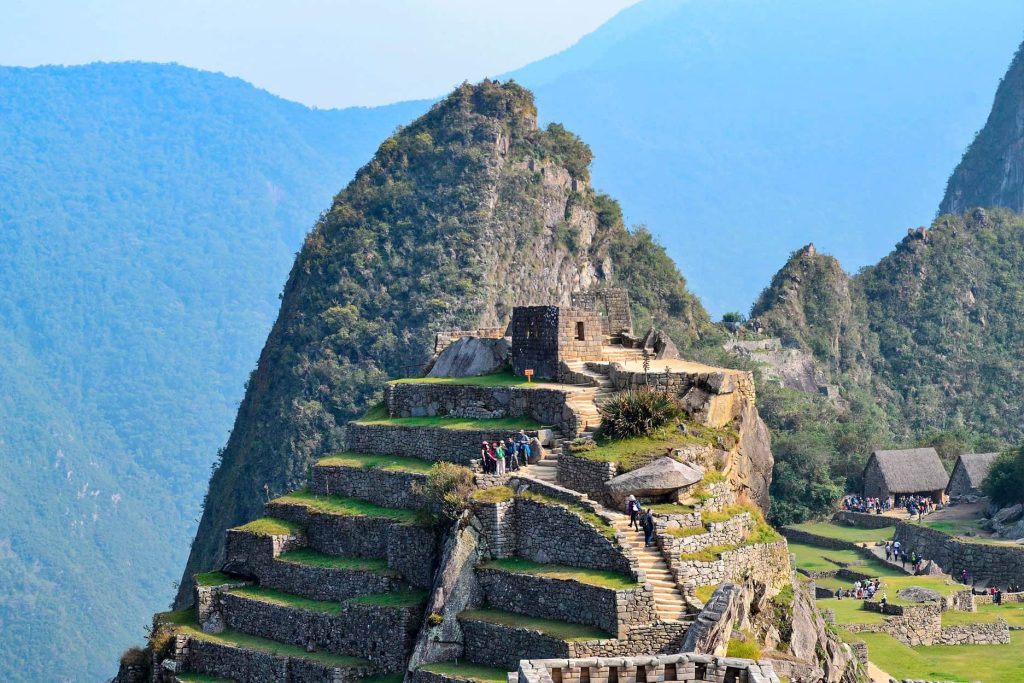
The precision stonework at Machu Picchu remains one of the site's most studied features.
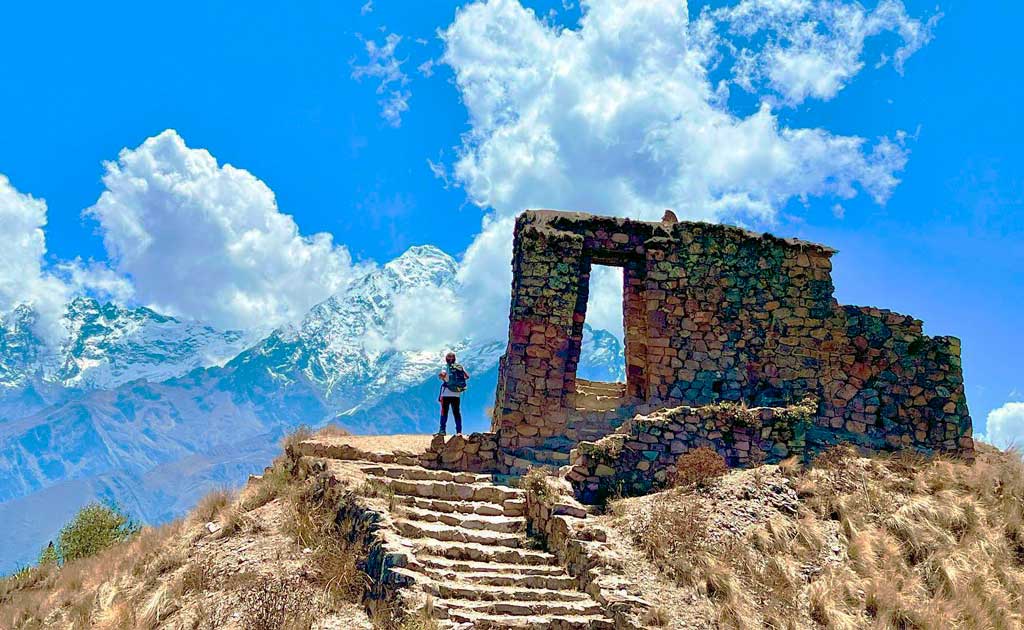
The Intihuatana at Machu Picchu remains one of the oldest solar clock's and calendar in the world.
What Is at Machu Picchu
What is at Machu Picchu covers roughly 200 individual structures spread across the citadel — the Temple of the Sun, an observatory-like structure aligned with the June solstice; the Intihuatana Stone, a carved ritual stone believed to have served an astronomical function; agricultural terraces engineered for a mountainside with almost no naturally flat ground; and residential sectors that housed the estate's staff, priests, and nobility. All of it was built using precision dry-stone construction, with stones cut and fitted so tightly that a knife blade can't slide between many of the joints — a technique that has also let the structures flex and resettle through centuries of Andean earthquakes rather than collapse.
Key terms in this guide
Sapa Inca
— the Inca emperor; Pachacuti is generally credited with commissioning Machu Picchu.
Intihuatana
— a carved ritual stone at Machu Picchu, believed to have astronomical significance.
Dry-stone construction
— building technique using no mortar, relying on precisely cut, interlocking stones.
How the World Learned About Machu Picchu
Machu Picchu was abandoned sometime around the Spanish conquest of the 1530s to 1560s, likely as the Inca Empire collapsed and its population scattered. Because the Spanish never found it, the citadel escaped the deliberate destruction that erased so many other Inca sites — a large part of why its stonework survives as intact as it does today. It was never entirely "lost," though — local Quechua-speaking families in the valley continued to know roughly where it was, and a farmer reportedly guided Peruvian explorer Agustín Lizárraga to the site as early as 1902, nearly a decade before American historian Hiram Bingham's 1911 expedition brought it to international attention.
From our local team
"People often expect a mysterious, hidden 'lost city.' What we actually walk them through is more impressive — a functioning royal estate, engineered with real intention, that survived because the Spanish simply never found it."
Kontiki Hikes · Cusco Region
Ready to see Machu Picchu for yourself? Let's plan your route.
By train or on foot via the Inca Trail or Salkantay, our local team can help you choose the right way to arrive.
Is Machu Picchu one of the Seven Wonders of the World?
Yes, it was named one of the New Seven Wonders of the World in a global 2007 internet poll.
How many people lived at Machu Picchu?
Estimates suggest a population of a few hundred to around 750 people at its peak, including nobility, priests, and support staff.
Pachacuti
Commissioning emperor
c. 1450
Built
1911
International attention
1983
UNESCO listing
Conclusion
Machu Picchu's real story is more grounded — and more impressive — than the "lost city" myth suggests: a deliberately built royal estate, engineered with remarkable precision, that survived because it was simply never found by the Spanish. Understanding what it actually is makes visiting it hit differently.
Local Cusco Guides · Sacred Valley, Cusco · Since 2018
Written by our local Cusco team, who guide visitors through Machu Picchu's history daily. Licensed by the Peru Ministry of Tourism (Mincetur). Rated 5.0 on Tripadvisor.
Frequently Asked Questions — What Is Machu Picchu
Machu Picchu is a 15th-century Inca citadel in the Peruvian Andes, generally believed to have served as a royal estate for the emperor Pachacuti, combining residential, religious, and agricultural functions on a mountain ridge above the Urubamba River.
Machu Picchu includes temples, residential structures, agricultural terraces, ceremonial baths, and precision-cut stonework, organized across roughly 200 structures built without mortar.
The nickname is technically a misnomer — Machu Picchu was never entirely lost, since local families in the valley knew of its location, but it was unknown to the outside world until Hiram Bingham's 1911 expedition brought it international attention.
Yes, Machu Picchu was inscribed as a UNESCO World Heritage Site in 1983, recognizing both its archaeological significance and the surrounding cloud-forest ecosystem.
American historian Hiram Bingham brought Machu Picchu to international attention in 1911, though a Peruvian farmer had reportedly guided an earlier explorer, Agustín Lizárraga, to the site as early as 1902.