Short answer: choose the Classic Inca Trail if walking through the Sun Gate and passing genuine Inca ruins matters more to you than anything else, and you can book three to six months ahead. Choose the Salkantay Trek if you want bigger, more varied mountain scenery, a real shot at booking last-minute, and don't mind reaching Machu Picchu by train on the final morning instead of on foot through the ruins. Both treks end at the same place. How you get there, what you see along the way, and how far in advance you need to plan couldn't be more different — this guide breaks down exactly where they diverge.
Inca Trail vs Salkantay: At a Glance
Both treks end in the same place — Machu Picchu — but almost everything about how you get there is different. Here's the full comparison before we go into each factor in detail.
| Factor | Classic Inca Trail | Salkantay Trek |
|---|---|---|
| Duration | 4 days / 3 nights | 5 days / 4 nights (4-day option available) |
| Highest point | Dead Woman's Pass, 4,215 m | Salkantay Pass, 4,630 m |
| Permit required | Yes — capped at 500/day incl. staff | No permit system |
| Booking lead time | 3-6 months ahead for peak season | Days to weeks, usually fine |
| Typical price | $600-1,200+ mid-range | $350-650 mid-range |
| Crowds on trail | Busy — fixed daily quota, same corridor | Noticeably quieter |
| Inca ruins en route | Yes — several sites, including Wiñay Wayna | No ruins on the trail itself |
| Scenery type | Cloud forest, stonework, terraced ruins | Glaciers, high alpine passes, then jungle descent |
| Arrival at Machu Picchu | On foot through the Sun Gate | By train/bus, same as non-trekkers |
Difficulty Compared
Both treks are rated moderate to challenging, but the difficulty shows up differently on each one. The Classic Inca Trail is hard mainly because of roughly 3,000 stone steps spread across four days, with Dead Woman's Pass on Day 2 as the single toughest climb — a steep, sustained ascent to 4,215 m. The effort is spread out: every day has real climbing, and fatigue builds gradually.
The Salkantay Trek concentrates its hardest effort into one day. Salkantay Pass, at roughly 4,630 m, is higher than anything on the Inca Trail, and the push to the pass and back down is a long, cold, physically demanding day regardless of fitness level. The days before and after are comparatively gentle — the trailhead starts around 3,300 m and the first big day only reaches Soraypampa at about 3,900 m — which means Salkantay's difficulty is more front-loaded into a single dramatic test rather than distributed evenly.
For a full day-by-day breakdown of the Inca Trail specifically, including what each day actually feels like, see our Inca Trail difficulty guide. If safety — not just difficulty — is your main concern, we cover that separately in our Inca Trail safety guide.
Scenery & Experience
This is the factor that splits opinion the most, because the two treks are genuinely offering different experiences, not just different difficulty levels.
The Inca Trail's defining feature is that it's an actual Inca road, still lined with original stonework, passing several ruin sites — including the terraced complex of Wiñay Wayna on the final day — before ending at the Sun Gate for the classic elevated first view of Machu Picchu. If the archaeology and the historical route itself are a big part of why you want to hike rather than take the train, this is the trek that delivers that.

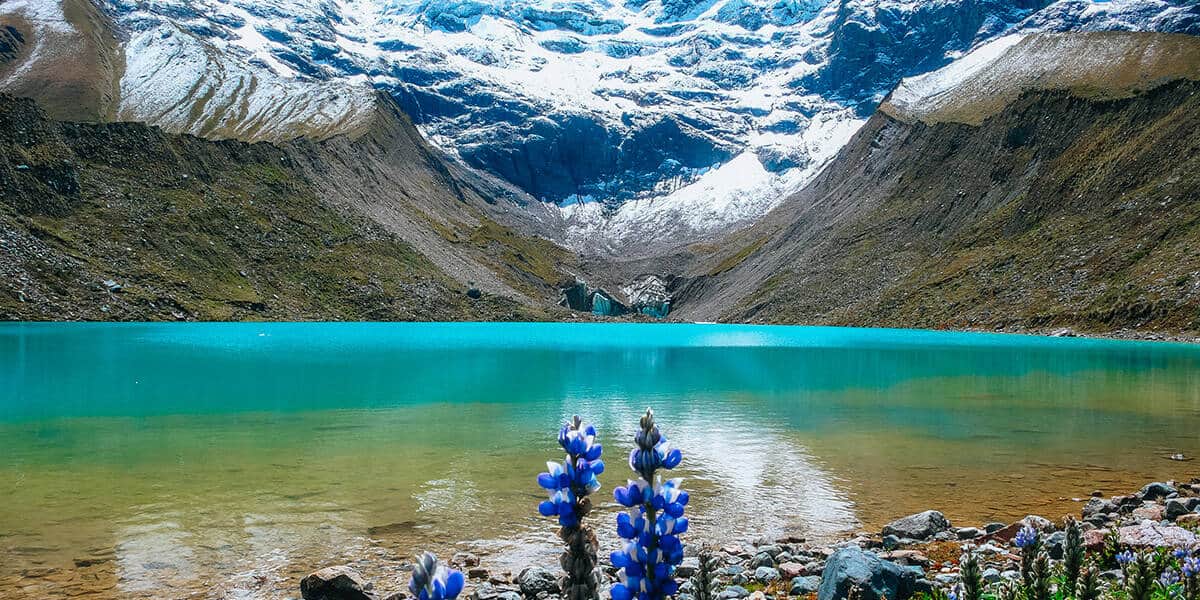
The Salkantay Trek trades archaeology for raw mountain scale. The route passes directly beneath Nevado Salkantay, a glaciated peak reaching 6,271 m, and covers genuinely more varied terrain — high alpine passes, glacial lakes, and a dramatic descent into cloud forest and jungle on the trail's later days. There are no Inca ruins along the Salkantay route itself, but the landscape variety in a single trek is hard to match.

Permits & Booking Timeline: The Real Practical Decider
For a lot of travelers, this section — not scenery or difficulty — is what actually makes the decision. The Classic Inca Trail operates under a strict government permit system, capped at 500 people per day including guides, cooks, and porters, of which only about 200 are trekkers. Peru's Ministry of Culture releases permits for the following year several months ahead, and peak season dates (June through August) routinely sell out three to six months in advance. If you're planning within a few weeks or even a couple of months of your trip, the Classic Inca Trail may simply not be available.
The Salkantay Trek has no equivalent permit system. That single difference is why it's become the default fallback when Inca Trail permits are gone, and why it's realistic to book Salkantay just days to a few weeks before you travel, even in high season.
Ask our local Cusco team.
Crowds
Even with its daily cap, the Inca Trail can feel busy — 200 trekkers a day, all moving through the same narrow corridor on a fixed itinerary, means you'll regularly cross paths with other groups, especially around campsites and Dead Woman's Pass. The Salkantay Trek, with no fixed daily quota but naturally lower demand and a wider trail in most sections, tends to feel noticeably quieter, particularly beyond the first day.
Cost Comparison
A mid-range Classic Inca Trail package typically runs $600 to $1,200 per person, covering the permit, guides, porters, camping equipment, and meals; budget options start around $600-750 and premium small-group services run $1,300-1,500 and up. A comparable Salkantay Trek package typically runs $350 to $650, with self-guided or very basic options as low as $250-400 and premium lodge-based or luxury-camping versions reaching $1,200 or more.
The gap comes down to the permit system: the Inca Trail's limited daily quota and mandatory larger support crew (porters and cooks are required, not optional) push baseline costs up regardless of which operator you book with. Note that as of 2026, Machu Picchu entrance tickets are purchased separately from either trek's permit or package price — budget for that on top of whichever trek you choose.
Which Trek Fits Which Traveler
Choose the Classic Inca Trail if:
- Walking through the Sun Gate and arriving at Machu Picchu on foot matters to you more than anything else
- You're genuinely drawn to Inca archaeology and want ruins along the route itself, not just at the destination
- You can commit and book three to six months ahead
- You'd rather have your hardest effort spread across four days than concentrated into one
Choose the Salkantay Trek if:
- You're planning within a few weeks or months of your trip and want a real shot at getting a spot
- Big, varied mountain scenery — glaciers to jungle — matters more to you than historical ruins along the way
- You want a lower price point without sacrificing a genuine multi-day trekking experience
- You don't mind reaching Machu Picchu by train and bus rather than on foot through the Sun Gate
Can You Do Both?
Not in a single continuous trek — they're separate routes that converge near Machu Picchu, not stages of one trail. Some travelers do hike Salkantay on one trip and the Inca Trail on a return visit, and a few premium multi-day itineraries combine elements of both over a longer 7-8 day package. If you're deciding between a single trip now versus splitting the experience across two visits, our local team can talk through what that would realistically look like for your timeline and budget — reach out through the enquiry above.
Conclusion
There's no universally "better" trek here — only a better fit for what you actually want. The Inca Trail wins on history and that unmatched Sun Gate arrival, but demands early booking and a higher budget. Salkantay wins on scenery variety, price, and last-minute flexibility, at the cost of skipping the ruins and the traditional entrance. Whichever you choose, both end at the same extraordinary place. If you're still torn, get in touch with our team — we run both routes and can tell you honestly which one fits your dates, fitness, and priorities.