By Kontiki Hikes·Local Cusco Team·13 min read·Updated August 2026
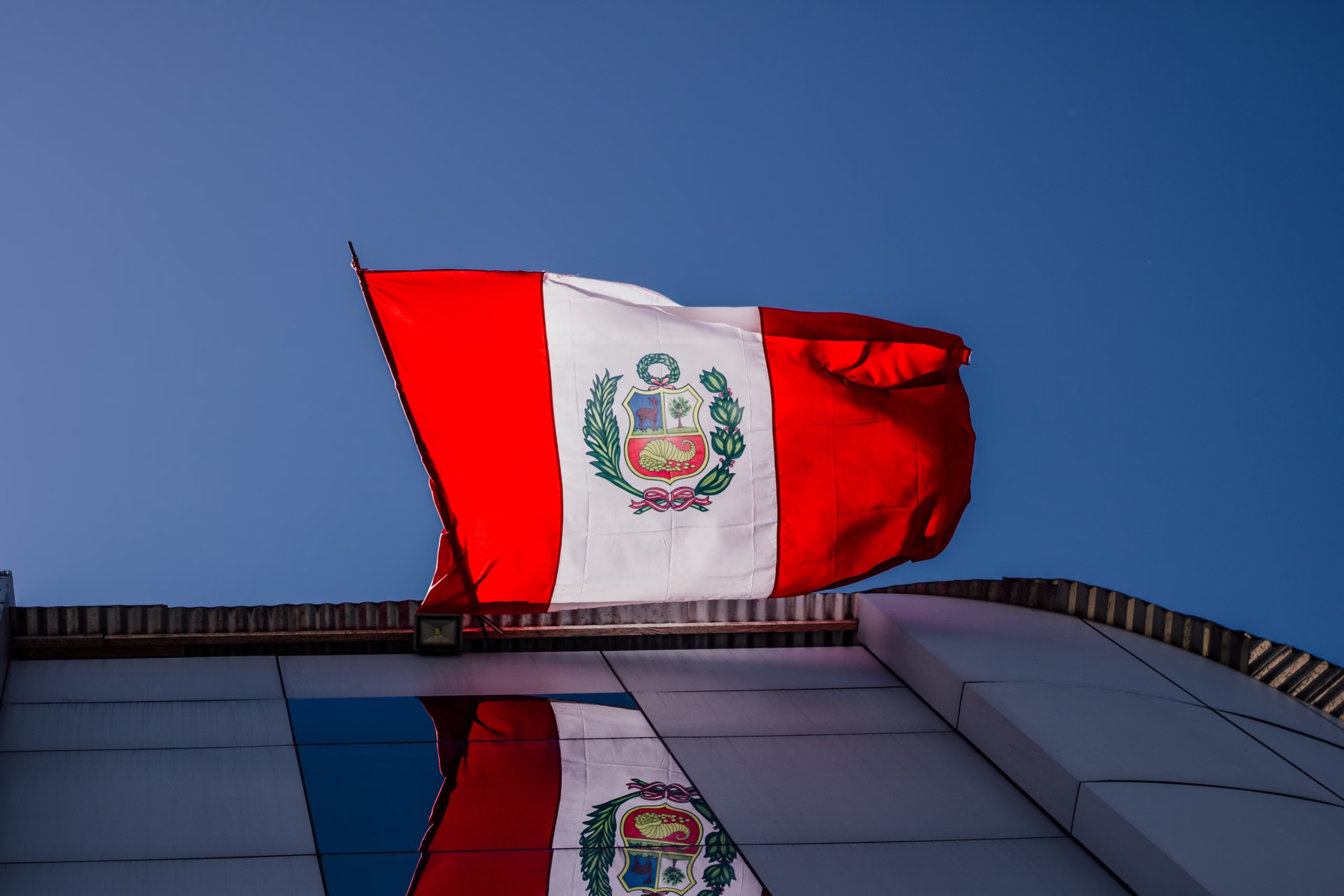
Peru's flag is three vertical bands of red-white-red, adopted in its current form in 1825 after several earlier design iterations during the independence period — not to be confused with Cusco's separate, horizontal rainbow flag, which is often mistaken for the LGBTQ Pride flag despite having an entirely different origin.
Short answer: Peru's national flag is a simple vertical tricolor — red, white, red — but travelers in Cusco often spot a completely different, rainbow-striped flag flying alongside it and assume it's a Pride flag. It isn't. This guide covers what Peru's actual flag means, how its design evolved through several versions in the years after independence, and clears up the Cusco flag mix-up that catches almost every first-time visitor off guard.
Key takeaways
Vertical red-white-red bandsPeru's national flag design, adopted in its current form in 1825.
The state flag adds a coat of armsGovernment buildings fly a version with a shield in the center white band; civilians fly the plain tricolor.
Cusco's flag is a completely separate designA horizontal seven-color rainbow, representing the Inca Empire — not Peru's national flag, and not connected to Pride flags.
The color legend isn't confirmed historyA popular story about flamingos inspiring the colors is widely repeated but not historically verified.
The design went through several iterationsSan Martín's original 1820 flag looked quite different from today's design.
Both flags fly together in CuscoIt's common and normal to see Peru's flag and Cusco's rainbow flag side by side on the same building.
1825
Year the current flag design was formally adopted
2
Colors: red and white
7
Stripes on Cusco's separate rainbow flag
3
Symbols on the state flag's coat of arms: vicuña, cinchona tree, cornucopia
Peru's National Flag: Design & Colors
Peru's flag consists of three equal vertical bands — red, white, red — with the civilian version left plain and the official state flag (flown by government institutions, the military, and on official documents) featuring Peru's coat of arms centered in the white band. That coat of arms depicts three symbols representing the nation's natural wealth: a vicuña (representing the animal kingdom and native Andean camelids), a cinchona tree (representing plant life, and historically significant as the natural source of quinine, once one of the only effective malaria treatments in the world), and a cornucopia spilling gold coins (representing mineral wealth). A civic flag variant, used for merchant shipping and some ceremonial purposes, includes a simpler shield design distinct from the full coat of arms.
How to use this guide
Design and colors first, then the historical evolution of the design, then the Cusco flag mix-up almost every visitor encounters at some point.
A Brief History of the Flag's Design
Peru's flag went through more changes in its early years than most travelers realize. The first version, introduced by independence leader José de San Martín in 1820, used a diagonal design featuring red and white sections along with a rising sun emblem — visually quite different from the vertical tricolor recognized today. A popular legend credits San Martín with choosing red and white after observing flamingos with red-and-white plumage during his campaign along the Peruvian coast — a memorable story, though historians note it isn't definitively confirmed and may be more folklore than documented fact, since flag design decisions of this era were rarely recorded in detail.
Following independence in 1821, Peru cycled through at least one further variation before Simón Bolívar, who led the final campaigns against remaining Spanish royalist forces, influenced the shift toward the simpler vertical tricolor design. This version was formally established in 1825, and while minor adjustments to the coat of arms details have occurred since, the basic red-white-red vertical design has remained Peru's flag for exactly two centuries.
1820
San Martín's original diagonal flag with rising sun
1821
Independence declared; early flag revisions follow
1825
Current vertical tricolor design formally adopted
Present
Design remains unchanged for two centuries
From our local team
"We get asked about the rainbow flag in Cusco constantly, especially from first-time visitors. It's genuinely one of the most common questions we field — no, it's not a Pride flag, it's Cusco's own civic flag representing the old Inca empire, and it's flown here with real civic pride."
Why Cusco's Flag Gets Mistaken for the Pride Flag
Flying separately from Peru's national flag, Cusco's own flag is a horizontal design of seven rainbow-colored stripes, representing Tahuantinsuyu — the Inca Empire's name for itself and its four historic regions. The resemblance to the modern LGBTQ Pride flag is purely coincidental; Cusco's flag has roots in 20th-century civic symbolism tied to Inca heritage, formally adopted by the municipality decades before the Pride flag was created in the late 1970s in an entirely separate cultural context. Because both flags are often flown together on municipal buildings around Plaza de Armas, the mix-up is one of the most common questions we hear from first-time visitors, and it's worth clearing up before your trip rather than during it.
Myth
Fact
The rainbow flag in Cusco is a Pride flag
It's Cusco's own civic flag, representing the Inca Tahuantinsuyu — coincidentally similar in color but historically unrelated, and older than the Pride flag itself.
Peru's national flag has a coat of arms on it
Only the official state flag does — the plain civilian flag is just three colored bands.
Peru's flag design has never changed
It went through at least two earlier iterations, including San Martín's diagonal design, before the current version was adopted in 1825.
Kontiki Hikes · Cusco Region
Curious about more Cusco symbolism? Our team can point you to the details worth knowing.
Beyond the flag mix-up, Cusco has plenty of civic and Inca-era symbolism worth understanding before your trip.
Yes — many Peruvian regions and cities have their own civic flags and symbols distinct from the national flag, similar to Cusco's.
Is it disrespectful to photograph Peru's flag?
No, photographing flags is completely normal for travelers — just show general respect at official ceremonies or military sites.
What does the vicuña on the coat of arms represent?
It represents Peru's animal wealth and native Andean wildlife — the vicuña is also the source of the world's most valuable natural wool.
Red & White
National colors
1825
Current design adopted
Cusco Flag
Separate rainbow civic flag
Not Pride
No connection to LGBTQ flag
Conclusion
Peru's flag tells a simple story on the surface — red and white, adopted after a few early iterations following independence — but the real conversation-starter for most travelers is the separate, rainbow-striped flag flying beside it in Cusco. Now you know: two different flags, two different meanings, no connection between them.
Local Cusco Guides · Sacred Valley, Cusco · Since 2018
Written by our local Cusco team, who field flag questions from first-time visitors on Plaza de Armas regularly. Licensed by the Peru Ministry of Tourism (Mincetur). Rated 5.0 on Tripadvisor.
Frequently Asked Questions — Peru's Flag
Red and white are Peru's national colors, generally associated with the blood shed for independence and peace, respectively. A popular legend credits liberator José de San Martín with choosing them after seeing red-and-white flamingos, though this story isn't historically confirmed.
No. Peru's national flag is vertical red-white-red bands. The confusion usually comes from Cusco's own flag, a horizontal rainbow design representing the Inca Tahuantinsuyu, which coincidentally resembles the LGBTQ Pride flag despite having no connection to it.
Peru's state flag (used by government institutions) includes a coat of arms in the center white band, featuring a vicuña, a cinchona tree, and a cornucopia spilling gold coins — symbols of Peru's animal, plant, and mineral wealth.
Peru's current flag design was formally established in 1825, shortly after independence, though earlier versions with different color arrangements were used briefly during the independence period itself.
Cusco's flag uses seven horizontal rainbow stripes to represent Tahuantinsuyu, the Inca Empire's own name for itself, and its four regions. It predates the modern LGBTQ Pride flag and has no connection to it, despite the visual similarity.
Yes. José de San Martín's original 1820 flag used a diagonal design with red and white sections and a rising sun, distinct from the vertical tricolor adopted a few years later under Simón Bolívar's influence.