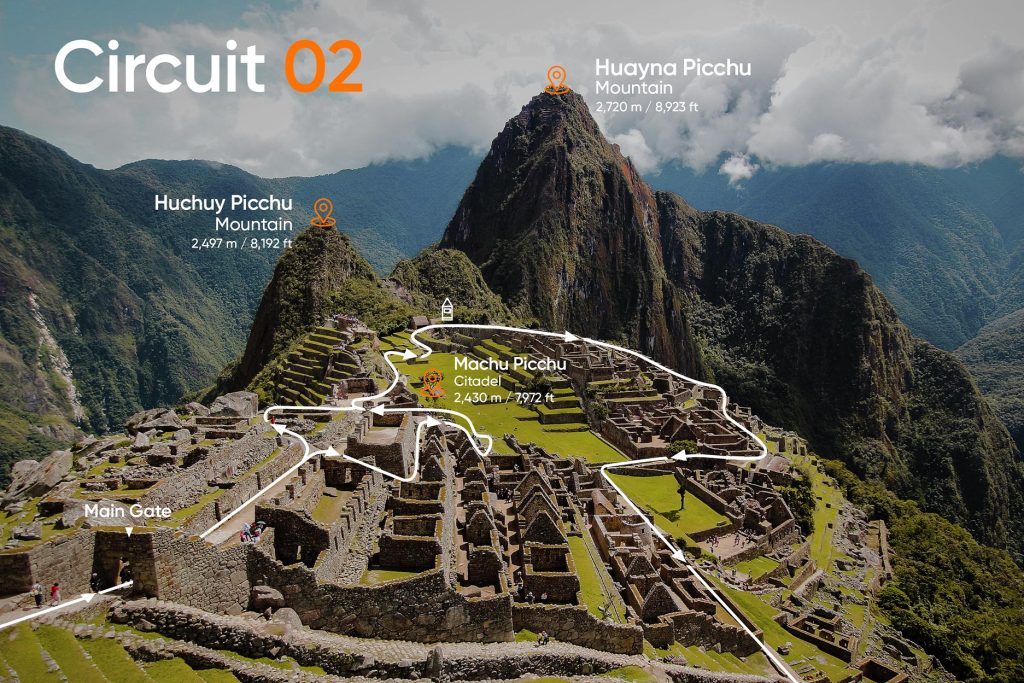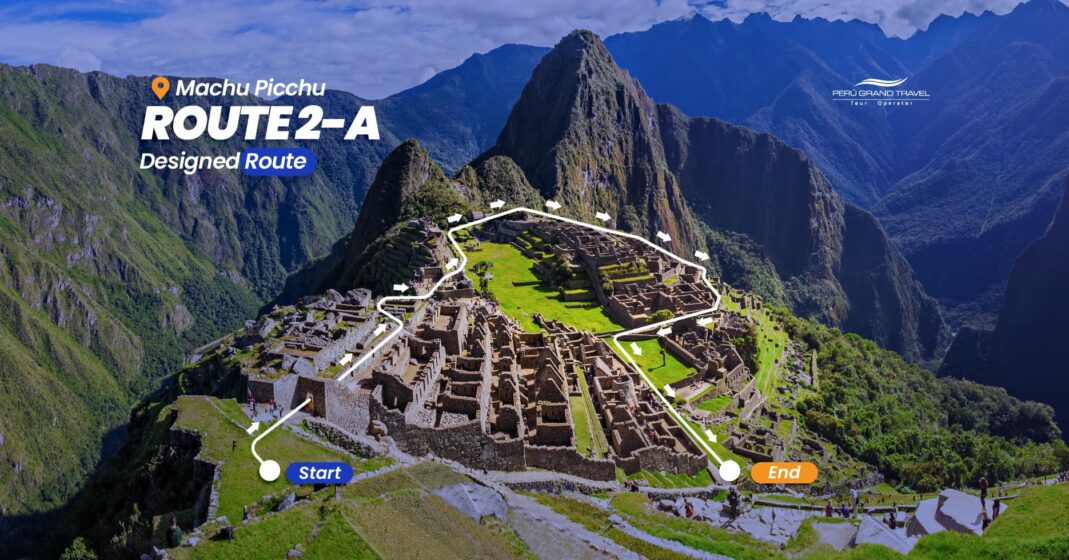
The actual difference between Machu Picchu Circuit 2A and 2B comes down to one climb and one photograph. 2A (Designed Route) ascends through the upper agricultural terraces to the Guardian's House and its Classic Postcard viewpoint before descending into the urban sector. 2B (Lower Terrace Route) skips that climb entirely, entering the urban sector directly from a lower point. Everything after that — the Temple of the Sun, Royal Palace, Sacred Plaza — is shared by both. Search around online, though, and you'll find genuinely conflicting descriptions of which route does what — we dug into why, and what our own guides, who lead both routes weekly, can confirm directly.
Why Online Sources Disagree About 2A vs 2B
If you've already searched this question, you may have noticed something strange: travel sites don't agree on the basic facts. Some describe 2A and 2B as "virtually interchangeable" with barely any difference worth planning around. Others state, confidently, that 2B is the route with the elevated viewpoint and 2A is the lower one — the exact reverse of what we (and Peru's own circuit naming convention) describe here. A few frame the difference as an extra loop past an old stone quarry rather than a viewpoint at all.
This isn't really a case of two legitimate schools of thought — it's a symptom of how fast the underlying system has changed. Peru's three-circuit, ten-route structure only went into effect on 1 June 2024, and route labels, seasonal availability and even entry procedures have been adjusted more than once since. A lot of travel-blog content answering "2A vs 2B" was written once and never substantially updated, so outdated or simply mistaken descriptions keep circulating and getting copied between sites. A smaller number of sources also appear to genuinely swap the letters by mistake, or describe an older version of the route split that predates a later adjustment.
What we can offer that a general web search can't: our guides walk both 2A and 2B multiple times a week and confirm route assignments for travelers daily. Everything in this guide reflects that direct, current operational experience, cross-checked against the government's own June 2024 circuit naming convention — not a single blog post repeated at second or third hand.
Route 2A — The Designed Route
2A ascends first, climbing through the Upper Agricultural Sector to reach the Guardian's House — the vantage point behind the single most reproduced photograph of Machu Picchu in existence, with the citadel spread below and Huayna Picchu rising behind it. From there, the route descends into the urban core to complete the same temple and plaza sequence shared with 2B.
What makes it unique: it's the only Circuit 2 sub-route that includes the elevated viewpoint. Practical detail: the full route takes roughly 2.5–3 hours, and because it's the single most requested ticket type at the site, it is consistently the first to sell out. Best for: first-time visitors who want the definitive photograph and are booking early enough to guarantee it.
Route 2B — The Lower Terrace Route
2B bypasses the upper terrace climb entirely, entering the urban zone from a lower access point for a closer, ground-level angle on the same core structures — the Temple of the Sun (Torreón), Royal Palace, Sacred Plaza, Main Temple, Temple of the Three Windows, Sacred Rock and the Qolqas storehouses.
What makes it unique: it's the gentler of the two walking profiles, without the additional ascent to the panoramic terrace. Practical detail: the route typically finishes in about 2–2.5 hours, slightly faster than 2A. Best for: travellers who want the core Circuit 2 experience without the extra climb, or anyone booking after 2A has already sold out. For the full standalone breakdown of every stop on this route, see our dedicated Circuit 2B guide.

What Actually Looks Different — Side by Side
Put plainly: on 2A, your first proper view of Machu Picchu is from above and at a distance — the citadel laid out below you, terraces stepping down toward the urban core, Huayna Picchu framing the background. It's a wide, elevated, slightly abstracted view, the one that photographs as a single clean composition. On 2B, your first proper view is from inside the urban sector itself — walls, doorways and stonework at eye level, with the wider citadel and mountain backdrop visible in glimpses between structures rather than as one framed shot. 2A gives you the citadel as a landscape; 2B gives you the citadel as architecture.
That difference carries through the rest of each visit. 2A's descent means you arrive at the shared temples — the Torreón, the Royal Palace, the Sacred Plaza — having already seen the whole site from above, so each structure reads as a detail within a place you've already mapped mentally. 2B's direct entry means you meet those same temples first, and only catch the wider context in pieces as you move through — a more intimate, less establishing-shot experience of the same real estate.
The Temples Both Routes Share — In Real Depth
Whichever route you take, this is what you're actually walking through. None of these are "just ruins" — each has a documented function, a competing theory or two, and a reason it still gets studied.
Temple of the Sun (Torreón)
The Torreón is the only structure at Machu Picchu built with a curved wall — a semicircular tower raised on a natural granite outcrop, its stonework considered among the finest at the entire site. Hiram Bingham, who brought the ruins to international attention after his 1911 expedition, named it for its resemblance to the Coricancha, the Temple of the Sun in Cusco dedicated to Inti, the Inca sun god. Two trapezoidal windows in the curved wall are aligned to the June and December solstices; on the June solstice specifically, sunlight passing through the eastern window strikes a marked ledge on a rock inside the temple, a deliberate calendrical function rather than a decorative one.
Beneath the Torreón, a natural cave with carved stepped stones has been called the Royal Mausoleum since Bingham's day, on the theory that it once held the remains of high-status individuals — possibly connected to Pachacuti himself, though no confirmed royal remains have ever been recovered there. A competing interpretation holds that the cave functioned instead as a shrine to Pachamama, Mother Earth, standing in symbolic contrast to the sun worship above it. Later archaeological work — researchers including Jean-Pierre Protzen have written on the site's construction techniques — has refined but not fully resolved the debate between these functions.

Royal Palace (House of the Inca)
Positioned just below the Torreón, the Royal Palace is built in the classic Inca "kancha" layout — a set of enclosures arranged around a central courtyard, here comprising two large rooms and two three-walled huayranas that likely served as kitchen and workshop space. What sets it apart is plumbing: it contains the only water-flushed lavatory documented at Machu Picchu, along with a private stone-cut bathing pool fed directly from the site's spring system — meaning its resident received the freshest water at the citadel, arriving before it had passed through any other household.
Several researchers, including biographer and filmmaker Kim MacQuarrie, have written that the palace likely served as Pachacuti's own retreat, with the emperor's court, messengers and llama caravans moving constantly through the plaza just outside. Some accounts go further, suggesting Pachacuti intended Machu Picchu itself as his eventual burial place — though his mummy, like most Inca royal remains, was never recovered by archaeologists.

Sacred Plaza, Main Temple & Temple of the Three Windows
The Sacred Plaza forms the ceremonial heart of the upper citadel, anchored by the Temple of the Three Windows — three large trapezoidal openings cut into a single wall, facing east toward the sunrise. The temple is widely linked to Inca origin mythology: a legendary ancestral site called Tampu Tocco, the "House of Windows," from which the first Incas were said to have emerged. Most sources connect the three openings to the three realms of Andean cosmology — the celestial world, the world of the living, and the underworld — though accounts differ on exactly which window represents which realm, so treat any single confident left-to-right mapping you read elsewhere with a little caution.
The Main Temple sits alongside, one of the largest single structures in the citadel, though a subtle settling crack in its stonework has led researchers to conclude the ground beneath it shifted after construction — a rare visible flaw in otherwise famously precise Inca masonry, and a small but genuine reminder that these are real, aging structures rather than untouched relics.

Sacred Rock & the Qolqas (Storehouses)
At the northern edge of the urban sector stands the Sacred Rock (or Wank'a, in Quechua) — a granite monolith roughly 3 metres high and 7 metres wide, set upright on a low platform. Its upper edge closely mirrors the silhouette of Yanantin, the mountain rising directly behind it — archaeologists describe this as a documented example of Inca "landscape imitation," in which a carved or selected stone echoes a sacred natural feature to create a symbolic link between the built citadel and the surrounding Apus, or mountain spirits. It is sometimes called the Altar of the Replica of the Apus for exactly this reason.
Nearby, the Qolqas — storehouses built with careful ventilation to preserve stored grain and produce — represent the site's practical, agricultural infrastructure, a deliberate contrast to the temples' ceremonial focus and a reminder that Machu Picchu functioned as a working estate, not only a ritual site.

The Complete Side-by-Side Comparison
| Feature | Route 2A (Designed Route) | Route 2B (Lower Terrace Route) |
|---|---|---|
| First view of the citadel | Elevated, wide, from above | Ground-level, close, architectural |
| Guardian's House / Classic Postcard view | Included | Not included |
| Upper agricultural terraces | Included | Not included |
| Temple of the Sun (Torreón) | Included | Included |
| Royal Palace | Included | Included |
| Sacred Plaza, Main Temple, Temple of Three Windows | Included | Included |
| Sacred Rock & Qolqas | Included | Included |
| Entry point | Upper entrance, via terraces | Lower entrance, direct to urban sector |
| Typical duration | ~2.5–3 hours | ~2–2.5 hours |
| Official max stay (Circuit 2) | 2h 30m | 2h 30m |
| Physical demand | Moderate — includes an uphill terrace climb | Easy to moderate — flatter overall |
| Base ticket price | Same as 2B | Same as 2A |
| Sell-out speed | Usually first — the most requested ticket at the site | Slightly more available, especially last-minute |
| Best for | First-timers wanting the iconic photo | Visitors who already have that view, or want a shorter, flatter walk |
Which Should You Choose? By Traveler Type
First-time visitors who want the classic photo
Choose 2A. The Guardian's House viewpoint is the single most recognizable image of Machu Picchu, and it's exclusive to this route (and to Circuit 1). Book as early as possible — this is the first Circuit 2 allocation to sell out each season.
Repeat visitors, or anyone who already has that photo
Choose 2B. You'll see the same core temples and plazas with less uphill effort, and typically finish faster — a smart choice if you're pairing Machu Picchu with another activity the same day.
Families with young children or limited mobility
Choose 2B. The flatter profile without the additional terrace climb makes it the more comfortable option, though note that Machu Picchu's stone pathways are uneven throughout regardless of route — contact us to discuss specific mobility needs.
Travelers booking last-minute or after 2A sold out
2B is very often still available when 2A isn't, and it's a genuine alternative rather than a consolation prize — you still reach the Temple of the Sun, Royal Palace and Sacred Plaza either way.
Photographers specifically chasing the elevated angle
Choose 2A, or consider Circuit 1, which also reaches the elevated panoramic viewpoint via a different entry sequence — useful to know if 2A is sold out for your date.
Getting There & What Happens at the Gate
Both 2A and 2B are reached the exact same way — the route choice only affects what happens once you're inside the citadel. Here is the real route and timing used on Kontiki's own full-day departure from Cusco.

Cusco → Ollantaytambo
Private or shared van, approximately 1 hour 30 minutes by road through the Sacred Valley.
Ollantaytambo → Aguas Calientes
PeruRail train, approximately 1 hour 40 minutes, following the Urubamba River through cloud forest.
Aguas Calientes → Machu Picchu
Shuttle bus, approximately 25 minutes up the switchback road to the citadel entrance.
At the entrance checkpoint
Passport check against your ticket (names must match exactly), followed by your guide splitting the group by assigned route — this is the point where your 2A or 2B assignment is enforced.
A few practical details worth knowing before you go, regardless of which route you're assigned: bags are limited to 40 x 35 x 20cm, single-use plastics (including disposable water bottles) are prohibited and checked at entry, and re-entry is not permitted once you've exited — plan your bathroom and water stops accordingly, since facilities exist only near the main entrance. Morning entry slots on either route generally mean better light for photography and lower crowd density; afternoon slots trade some of that for a calmer, less rushed pace once the day's tour groups have moved through.
Because Circuit 2's entry windows run throughout the day rather than only at dawn, this route is one of the few at Machu Picchu that works comfortably as a same-day round trip from Cusco — no overnight in Aguas Calientes required, which is exactly what makes the full-day train tour below such a popular way to book it.
- Round-trip PeruRail journey through the Sacred Valley
- Guided walk through the citadel with a local Quechua guide
- Machu Picchu entrance tickets included
- Easy difficulty — no hiking required, back in Cusco by evening
This full-day departure works for either sub-route — tell our team your preference between 2A and 2B when you book, and we'll do what we can to secure it.
Tickets & Booking Notes
2A and 2B share the same base Circuit 2 ticket price — there is no premium for the elevated viewpoint. For exact current pricing across visitor categories, see our full Machu Picchu Tickets guide. If you're still deciding between circuits entirely — not just sub-routes — our circuit planning guide walks through matching entry windows to your itinerary.
Guide: mandatory for citadel entry on either route, per Ministerial Resolution No. 000285-2025-MC — included as standard on all Kontiki bookings.
Myth vs. Fact
- ✓ 2B is a cheaper, budget version of 2A.
- ✓ 2B is a significantly smaller, less complete tour.
- ✓ Every website agrees on which route has the elevated view, so any source is reliable.
- ✓ 2A and 2B cost exactly the same — the difference is the route, not the price.
- ✓ Both reach the same 5–6 major stops; only the Guardian's House viewpoint and upper terraces are 2A-exclusive.
- ✓ Online sources genuinely conflict on this specific question — cross-check anything you read against a current, direct operational source before booking around it.
Glossary
Ruta Terraza Inferior: "Lower Terrace Route," the formal Spanish name for Route 2B.
Torreón: Spanish for "tower" — the common name for the Temple of the Sun.
Kancha: An Inca architectural unit of enclosures arranged around a central courtyard, used for the Royal Palace.
Wank'a: Quechua name for the Sacred Rock.
Apu: A mountain spirit or deity in Andean cosmology.
Tampu Tocco: "House of Windows" — the legendary ancestral origin site referenced by the Temple of the Three Windows.
Common Mistakes
Trusting the first search result on which route has the view. As covered above, this is one of the most inconsistently reported facts about Machu Picchu online — verify with a current, direct source. Assuming price reflects route quality. 2A and 2B cost the same. Waiting to book 2A. As the most requested ticket type at the entire site, it regularly sells out before mountain-inclusive routes do. Expecting to switch routes on arrival. Each ticket is fixed to its sub-route at the point of sale. Planning to enter without a guide. Citadel entry now requires being part of a licensed guide's group on either route.
International Recognition
Machu Picchu has been a UNESCO World Heritage Site since 1983 and was voted one of the New Seven Wonders of the World in 2007. The Guardian's House viewpoint reached on Route 2A is the specific vantage point behind the vast majority of the site's international media coverage and tourism marketing — the single image most non-visitors picture when they hear the site's name. The Torreón, meanwhile, remains one of the most frequently cited structures in academic work on Inca archaeoastronomy.
Frequently Asked Questions — Circuit 2A vs 2B
Strip away the marketing — and the noise of contradictory blog posts — and the choice between Circuit 2A and 2B is genuinely simple: one climb, one photograph, otherwise identical cores of real history. Decide based on whether that specific elevated view matters to you and how much uphill walking you want, not on price and not on whichever version of the story the first search result happened to tell you. Either way, you're seeing the same Torreón, the same Royal Palace, the same Sacred Plaza that make Circuit 2 the most requested experience at Machu Picchu.
Tell us your priority, we'll handle the rest.