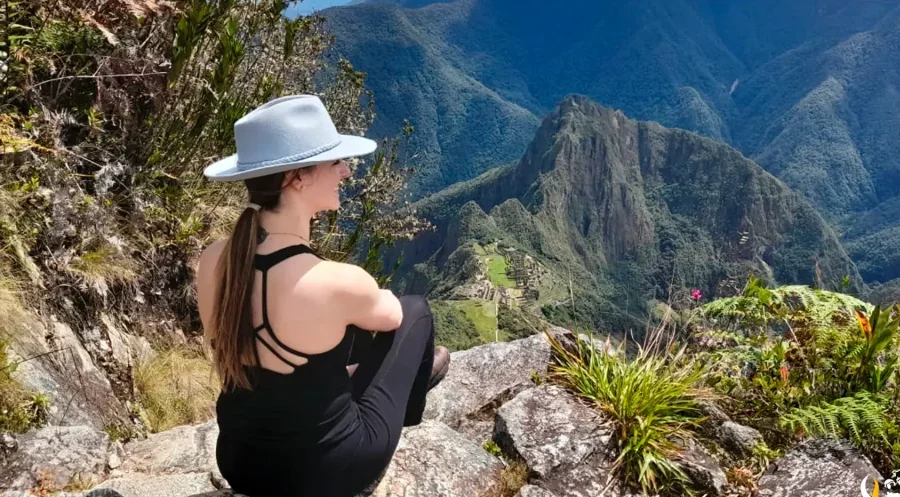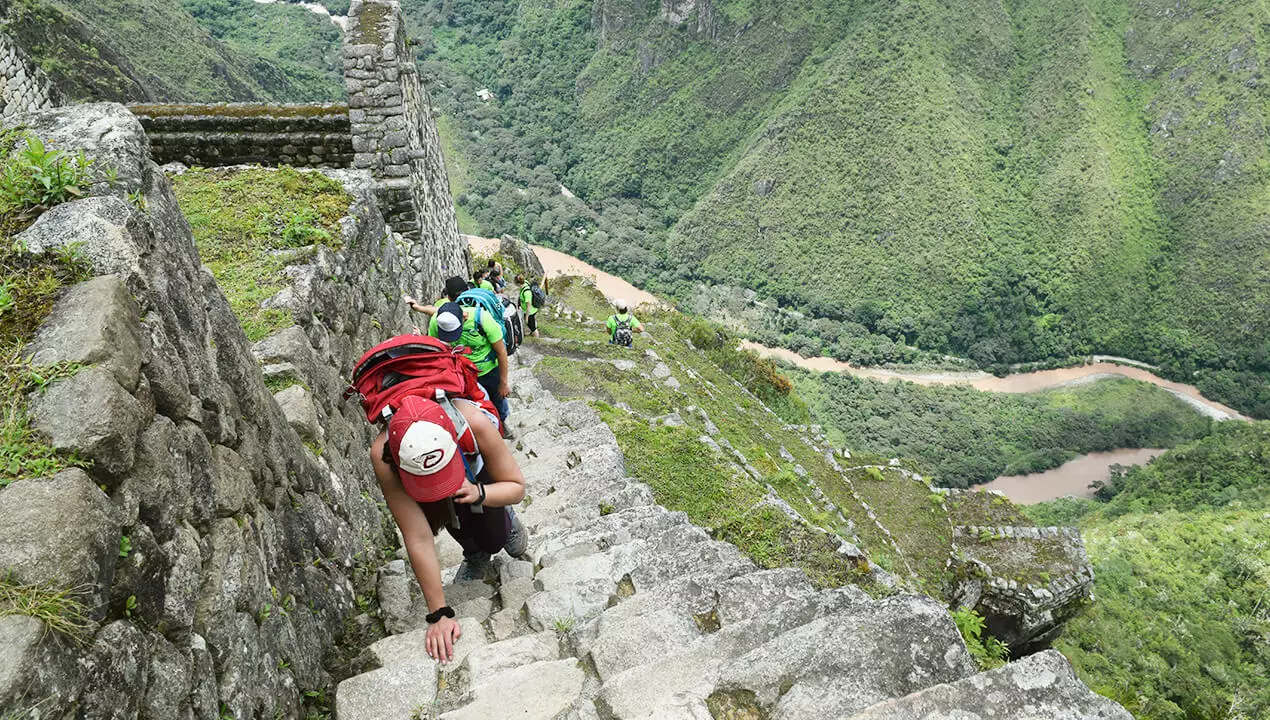
The Inca Trail is the only way into Machu Picchu that arrives on foot, through the Sun Gate, exactly as travelers to the citadel would have arrived 500 years ago. It's a strictly permitted, multi-day trek along the actual stone road built by the Inca state — not a modern path built to resemble one — passing through cloud forest, high mountain passes, and a sequence of real archaeological sites most visitors to Machu Picchu never see at all. Here's what the trek actually involves, the history behind every major stop, and every way to book it.
A Journey Through History, Not a Reconstruction
The Inca Trail is one section of the Qhapaq Ñan, the road system that once linked the Inca Empire across roughly 30,000 kilometres of Andean terrain, from present-day Colombia to Chile — a UNESCO-recognized engineering achievement on the scale of the Roman road network. The stretch that leads to Machu Picchu preserves original stone paving and stairways cut directly into mountainsides, built without draft animals, the wheel, or iron tools.
Along the way, the trail passes through cloud forest, high alpine passes, and a sequence of real archaeological complexes that served religious, agricultural, administrative, and astronomical functions — not staged attractions, but working sites within the Inca state's actual infrastructure.
The Archaeological Sites You'll Actually Walk Through
This is what sets the Inca Trail apart from every other way into Machu Picchu: none of these sites are visible from a train window.
Patallacta
Visible from the trailhead on Day 1, Patallacta ("upper town") is one of the largest agricultural and administrative complexes on the entire route — extensive terracing built to supply food to travelers and officials moving along the road, a reminder that the trail itself was a functioning piece of imperial logistics, not just a ceremonial path.

Runkurakay
A small, distinctively oval-shaped structure near the trail's second pass, believed to have functioned as a waystation or lookout post — its curved design is unusual among Inca architecture, which typically favors rectangular enclosures, and its exact purpose remains debated among archaeologists.

Sayacmarca
Perched dramatically on a steep ridge and reached by a narrow stone staircase, Sayacmarca ("inaccessible town") combines residential, ceremonial, and water-management functions in a single defensible complex — its name reflects the deliberate difficulty of its approach, likely a defensive design choice.

Phuyupatamarca
"Town above the clouds," and often described as one of the most beautiful sites on the trail — a series of ceremonial baths fed by natural springs descend the terraces here, suggesting a ritual function tied to water worship, a recurring theme across Inca sacred sites.
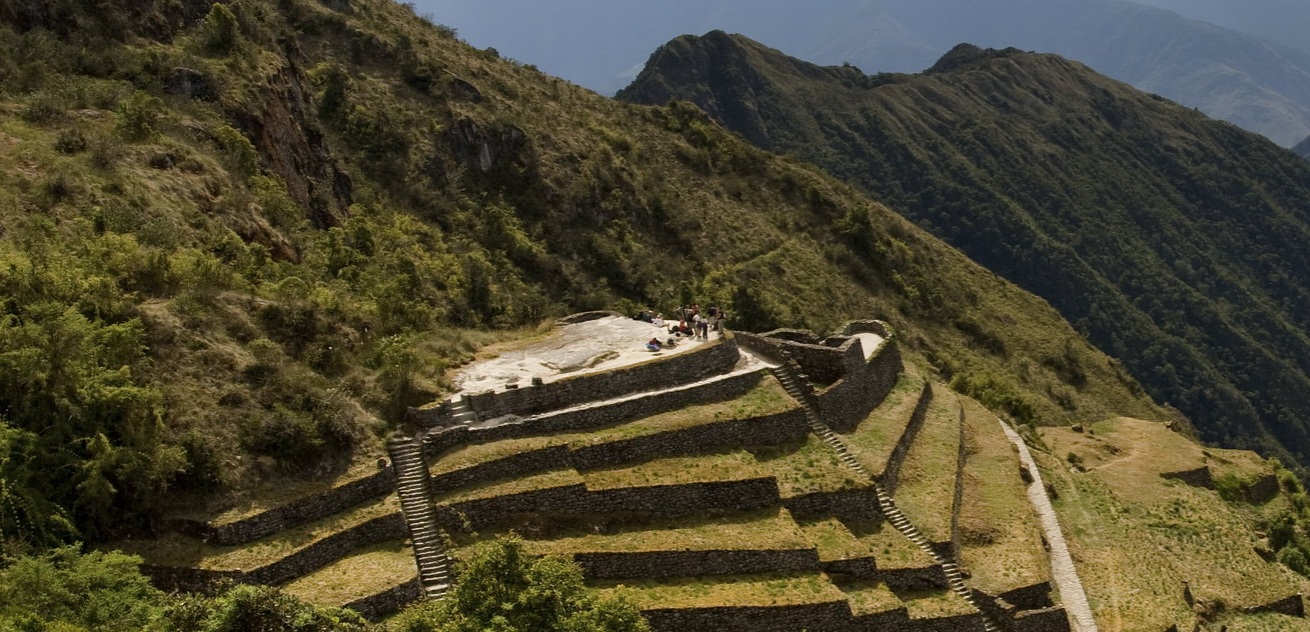
Wiñay Wayna
The largest and most architecturally complete site on the trail outside Machu Picchu itself: sweeping agricultural terraces descending toward the Urubamba canyon, connected to a ceremonial sector with fountains and temples. Its Quechua name means "forever young," after the pink orchid species that grows wild on the surrounding slopes. Most 4-day itineraries camp near here on the final night, positioning trekkers for an early departure to the Sun Gate.

Inti Punku (the Sun Gate)
The trail's final landmark and the original ceremonial entrance to Machu Picchu — precisely aligned so sunlight passes directly through the gateway during the June solstice. Arriving here on foot, with the citadel appearing below for the first time, is widely described as the emotional high point of the entire trek. For more on the gate's specific alignment and history, see our Circuit 1 guide, which covers Inti Punku's role within the wider Circuit 1 sub-routes.
Modern Trekking Tips: Technology That Actually Helps
The trail hasn't changed in 500 years, but how you prepare for it has. A few tools genuinely worth using:
Offline maps. Download the route on Maps.me or a similar offline app before leaving Cusco — cell coverage disappears almost entirely once the trek begins. Altitude tracking apps (many modern fitness watches now include blood-oxygen and elevation-gain tracking) can help you monitor acclimatisation objectively rather than guessing from how you feel. Satellite messengers (Garmin inReach or similar) are increasingly common among independent-minded trekkers for emergency communication, since the trail passes through genuine dead zones for days at a time — though your guide will already carry official emergency communication equipment. Permit-tracking: because permits are tied to your exact passport number and released for sale on a set schedule each year, setting a calendar reminder for release dates (rather than checking manually) is the single most effective way to avoid missing a preferred departure date.
Which Machu Picchu Circuit the Inca Trail Includes
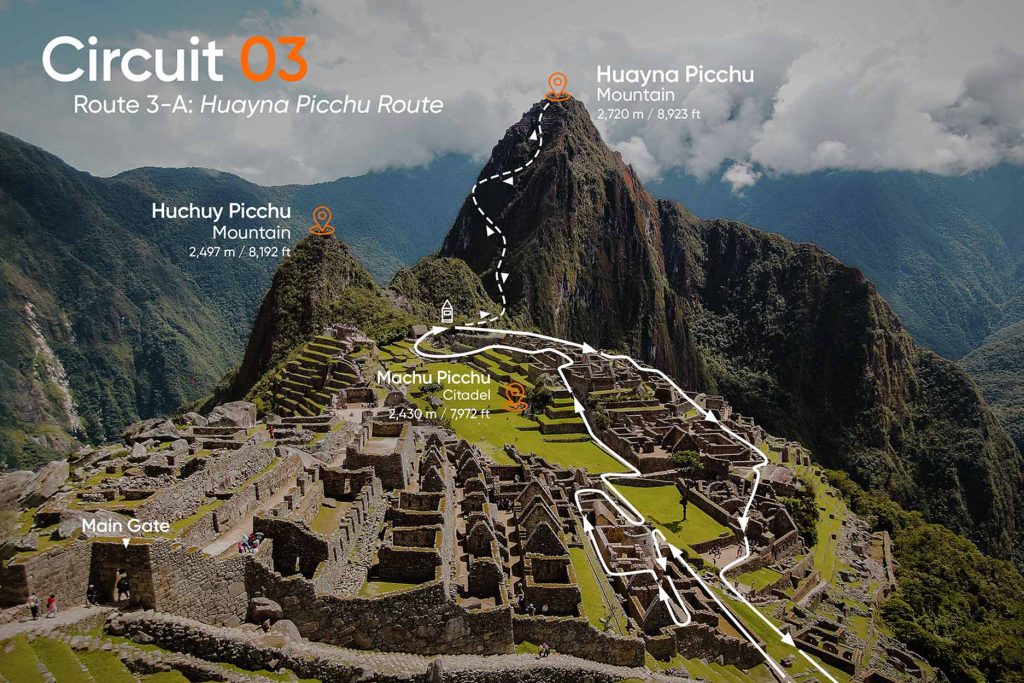
For several years, Inca Trail arrivals were assigned Circuit 1 first — the elevated Guardian's House viewpoint, since the trail physically arrives at the upper citadel — followed by a guided walk on Circuit 3
Either way, Huayna Picchu (Circuit 3A) is never automatically included — it remains a separate, capacity-limited ticket booked in addition to your Inca Trail permit. For the full picture of Circuit 1 and Circuit 3 individually, see our dedicated guides to Circuit 1 (Panoramic) and Circuit 3 (Royalty). If you're weighing this against the standard train-and-bus route, our Circuit 1 vs 2 and Circuit 2 vs 3 comparisons cover how these circuits relate to it.
Permits, Regulations & Booking Lead Time
The Inca Trail is strictly regulated by the Peruvian government to protect both the physical trail and the archaeological sites along it. Permanent ranger checkpoints verify passports and permits at multiple points; damaging flora and fauna, disturbing archaeological structures, or climbing on Inca stonework is prohibited and enforced.
| Trek | Total daily permit cap | Approx. split | Book ahead |
|---|---|---|---|
| Classic Inca Trail (4D/3N) | ~500 people/day | ~200 trekkers, ~300 guides/porters/crew | 4–6 months (up to 12 for peak season) |
| Short Inca Trail (2D/1N) | ~250 people/day | Trekkers plus crew | 3–6 months |
Every person on the trail — trekkers, guides, porters, and cooks — requires an individual permit tied to their exact passport number. This is why the "trekker" allocation within the daily cap is smaller than the total: the support crew required to run a multi-day camping trek safely outnumbers the guests. Permits for the following year are typically released for sale starting each 1 January, on a first-come, first-served basis — which is why popular months can sell out within weeks of release rather than closer to departure.
The base 2026 permit cost runs approximately $90 for an adult and $45 for students under 25, though this is bundled into your operator's total package price rather than paid separately — confirm exactly what's included when comparing quotes. Checkpoints are enforced at fixed physical points along the trail — Km 82 for the Classic 4-day route, Km 104 for the Short 2-day route — where rangers verify your original physical passport against your permit; photocopies or digital scans are not accepted. Current environmental rules also prohibit single-use plastics on the trail, require biodegradable toiletries, and restrict camping to designated sites only.
Best Time to Hike the Inca Trail
| Feature | Dry Season (May–Sep) | Shoulder (Apr, Oct) | Wet Season (Nov–Mar) |
|---|---|---|---|
| Weather | Clear, cold nights | Mixed, generally good | Regular afternoon rain |
| Permit availability | Sells out fastest | Moderate | Most available |
| Trail closure | Open | Open | Closed entirely each February for maintenance |
The Inca Trail closes completely every February for maintenance and conservation work — no permits are issued at all that month, regardless of trek length or operator.
Choose Your Inca Trail Departure
From a fast-paced 2-day introduction to full 7-day combinations with Salkantay or the Sacred Valley, here's the complete Kontiki Inca Trail lineup. Scroll to see every option.

Which Length Should You Choose?
Tight on time
Choose the Short Inca Trail (2D/1N). You still walk real Inca stonework and arrive through the Sun Gate — just a shorter, steeper approach on the trail's final stretch alone.
Want the complete classic experience
Choose the Classic Inca Trail (4D/3N). This is the full route from Km 82, including every major site covered above — Patallacta, Runkurakay, Sayacmarca, Phuyupatamarca, and Wiñay Wayna.
Prefer a slower pace, less rushed
Choose the 5D/4N version. Same route as the Classic trek, with an additional day built in for altitude adjustment and unhurried time at each site.
Want two treks, or maximum immersion
Choose a 7-day combination — either Inca Trail + Salkantay, or a Sacred Valley tour paired with the trail — if you have the time and want to see significantly more of the region beyond the trail itself.
Traveling in a women-only group
The women-only 4D/3N departure follows the same Classic route and difficulty, guided entirely by women.
Want to add a second iconic hike
The Inca Trail + Rainbow Mountain combination adds Vinicunca as a single extra day — a genuinely different landscape (mineral mountain vs. cloud forest) rather than more of the same.
How to Book
Only licensed tour operators can obtain Inca Trail permits — there is no way to purchase one directly as an independent traveler. Each person on the trek, including guides and porters, requires an individual permit tied to their exact passport, so your operator will need your passport details at the time of booking, not just before departure.
Myth vs. Fact
- ✓ You can hike the Inca Trail independently if you're experienced.
- ✓ Huayna Picchu is included with any Inca Trail permit.
- ✓ The trail is open year-round with no exceptions.
- ✓ A licensed guide is legally mandatory for every trekker, regardless of experience.
- ✓ Huayna Picchu is a separate, additional ticket booked on top of your permit.
- ✓ The trail closes entirely every February for maintenance — no exceptions.
Glossary
Warmiwañusca: Quechua for "Dead Woman's Pass," the trail's highest point at 4,215m.
Inti Punku: The Sun Gate — the original ceremonial entrance to Machu Picchu, reached at the end of the trail.
Camino Inca: Spanish for "Inca Trail," the trek's official name in Peru.
Common Mistakes
Booking too late. Permits routinely sell out 3–6 months ahead — this is not a "book a few weeks before" trip. Skipping acclimatisation. Arriving in Cusco and starting the trek within a day or two significantly raises the risk of altitude sickness, especially over Dead Woman's Pass. Assuming Huayna Picchu is included. It isn't — book it separately if you want it. Underestimating the gear list. Nights on the trail get cold even in dry season; a sleeping bag rated for genuinely low temperatures matters more than most first-timers expect.
International Recognition
Machu Picchu has been a UNESCO World Heritage Site since 1983 and was voted one of the New Seven Wonders of the World in 2007. The Qhapaq Ñan road network — of which the Inca Trail is a preserved section — was itself inscribed as a UNESCO World Heritage Site in 2014, recognized across the six modern countries it passes through.
Frequently Asked Questions — The Inca Trail
The Inca Trail isn't simply the scenic way to Machu Picchu — it's the historically accurate one, walking the same engineered road, past the same working sites, that the citadel's original visitors used. Book early, respect the acclimatisation schedule, and the Sun Gate will do the rest.
We'll handle the permits.